Sossusvlei

Where the Desert Meets the Sky Few places have become as closely associated with Namibia as Sossusvlei. Situated deep within the Namib-Naukluft National Park, this remarkable landscape of red dunes, white clay pans, and endless horizons has become one of the country's most recognised natural wonders.

Where the Desert Meets the Sky
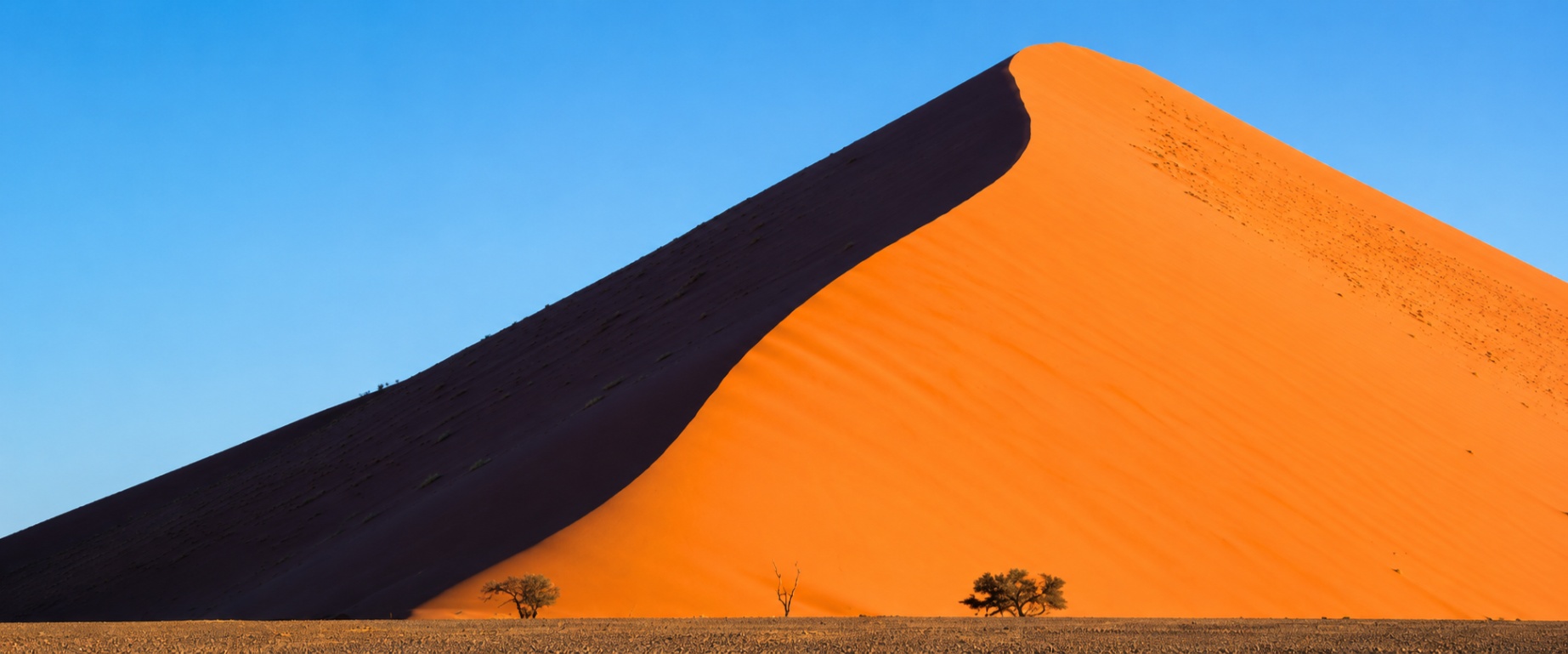
Few places have become as closely associated with Namibia as Sossusvlei. Situated deep within the Namib-Naukluft National Park, this remarkable landscape of red dunes, white clay pans, and endless horizons has become one of the country’s most recognised natural wonders.
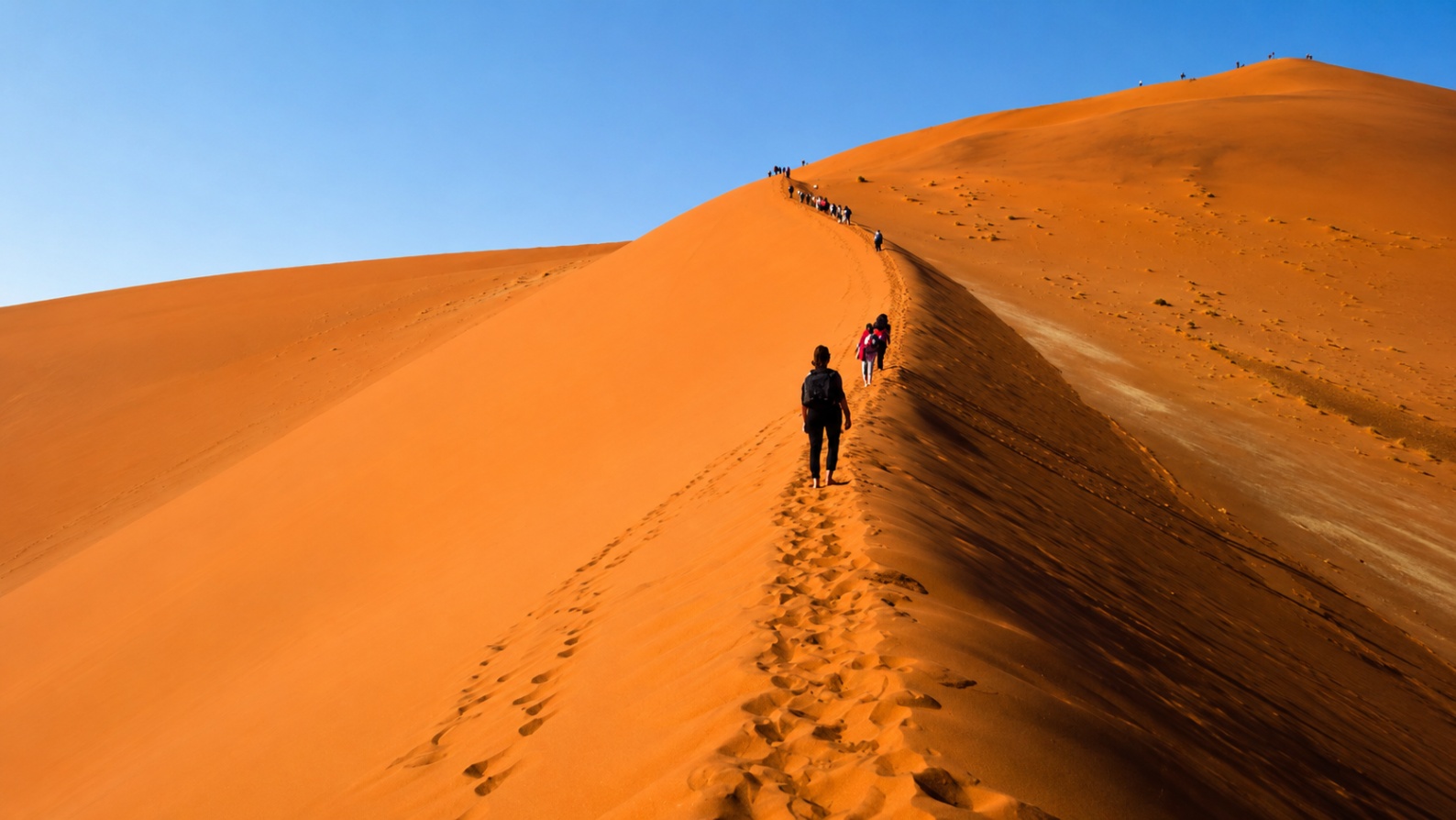
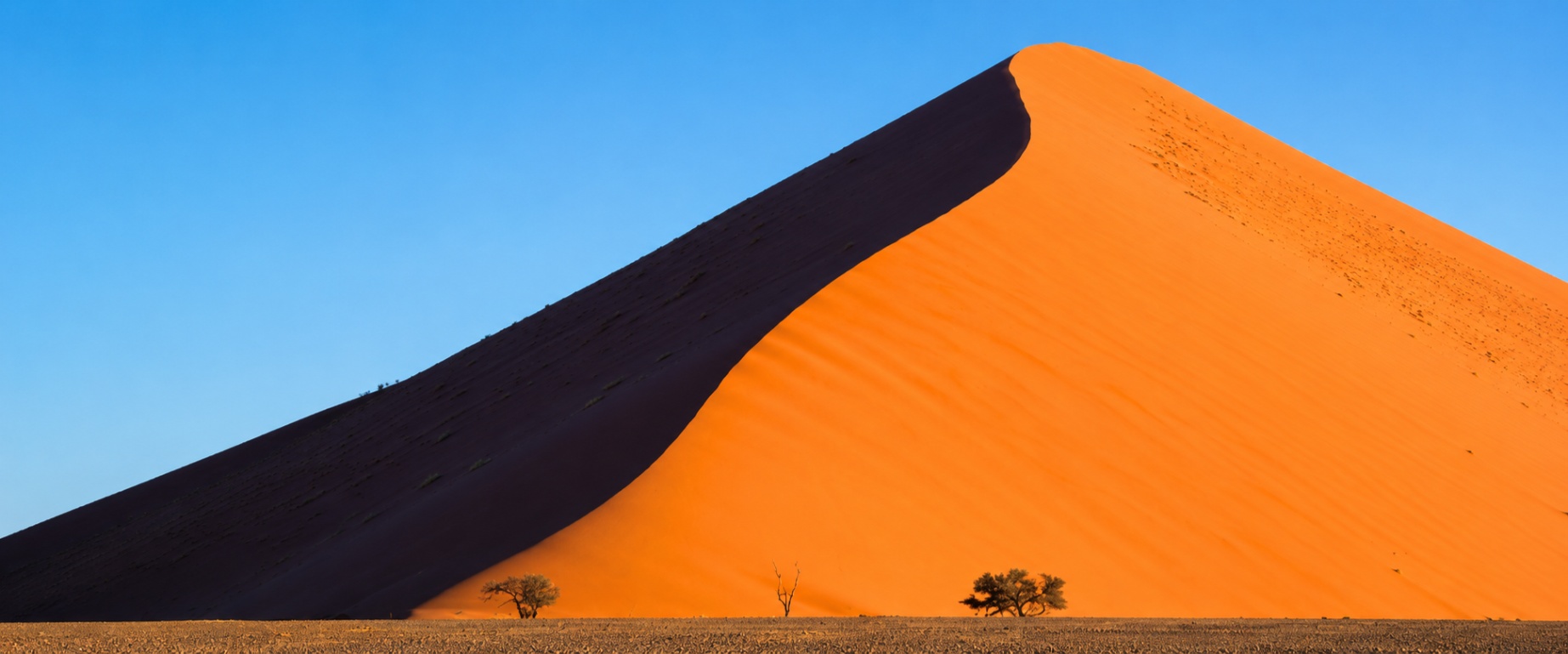
At sunrise, the desert begins to change colour. Long shadows stretch across the sand, the dunes glow in shades of orange and red, and the silence that characterises the Namib becomes impossible to ignore. It is a landscape that appears simple at first glance, yet reveals something new each time it is experienced.
Whether explored on foot, photographed in the early morning light, or viewed from above, Sossusvlei offers a perspective of Namibia that stays with visitors long after they leave.

Why Visit Sossusvlei?

There are deserts all over the world, but few feel quite like the Namib.
What makes Sossusvlei special is not only the dunes themselves, but the sense of space they create. The scale of the landscape is difficult to appreciate until standing amongst it. Distances seem greater, the silence feels deeper, and the colours shift constantly as the light changes throughout the day.
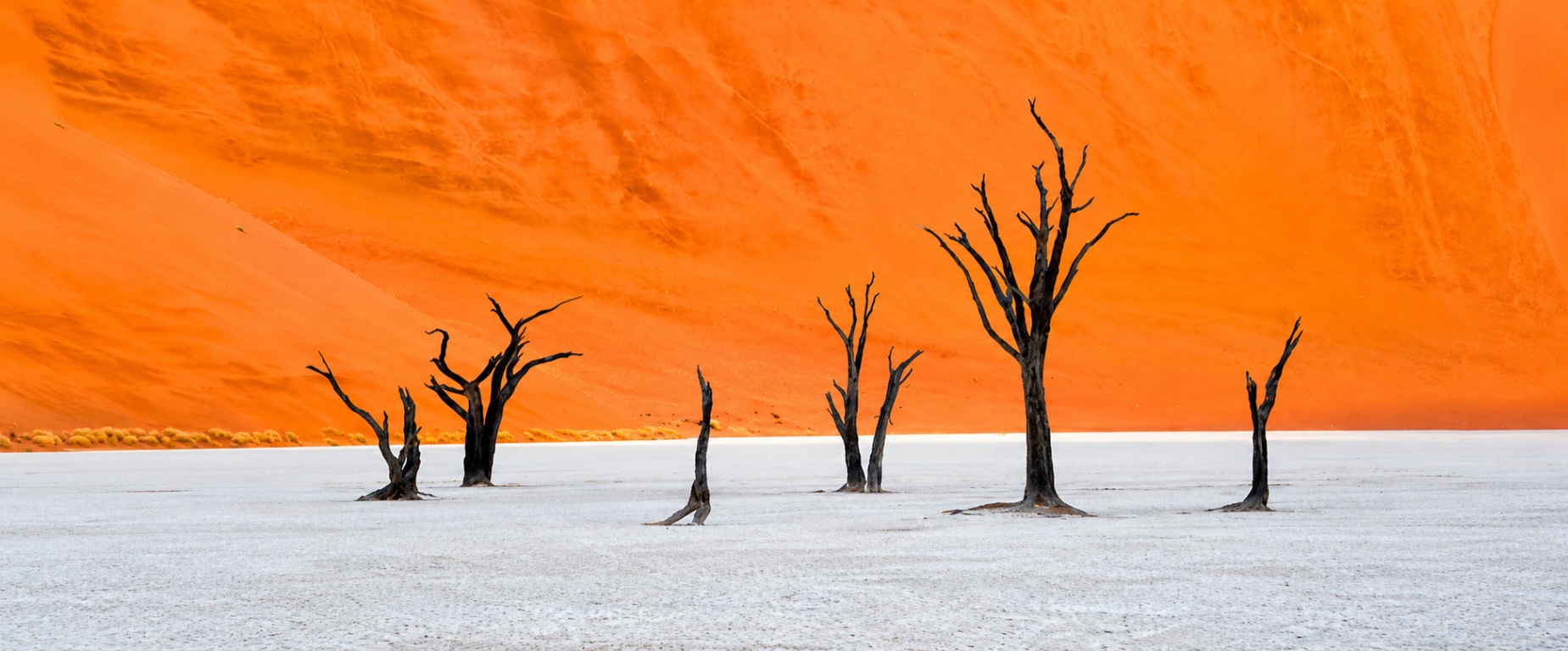
Visitors come to climb dunes that have been shaped by the wind over millions of years, to walk amongst the ancient camelthorn trees of Deadvlei, and to witness a landscape that has remained largely unchanged for centuries.
Yet perhaps the greatest attraction is something far less tangible. Sossusvlei has a way of slowing people down. In a world that rarely stands still, it is a place that encourages visitors to pause, look around, and simply take in their surroundings.

Interesting Facts

One of the World's Oldest Deserts

Sossusvlei lies within the Namib Desert, widely regarded as the oldest desert on Earth and estimated to be at least 55 million years old.

The Meaning of Sossusvlei

The name combines the Nama word "Sossus", meaning "dead end", and the Afrikaans word "vlei", meaning "marsh" or "pan".

A River That Rarely Flows

The Tsauchab River originates in the Naukluft Mountains and only reaches Sossusvlei after periods of significant rainfall. During exceptional rainy seasons, water may collect in the pan, creating a rare and remarkable sight.

Home to Some of the Highest Dunes on Earth

The dunes surrounding Sossusvlei are among the tallest in the world, with some rising more than 300 metres above the desert floor.

Deadvlei's Ancient Trees

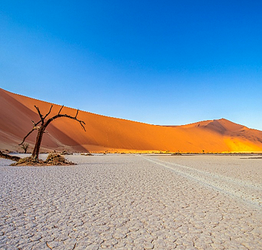
The famous camelthorn trees of Deadvlei are believed to have died hundreds of years ago when shifting dunes prevented floodwaters from reaching their roots. The dry desert climate has preserved them ever since.

A Landscape Shaped by Light

The colours of the dunes change dramatically throughout the day. Depending on the angle of the sun, the sand can appear golden, orange, deep red, or even purple in places.

The Story of Sossusvlei

The story of Sossusvlei is ultimately a story of wind, water, and time.
For millions of years, sand carried inland from the Atlantic coast accumulated across the western reaches of Namibia. As the wind continued to shape and move this sand, the dunes of the Namib gradually emerged, creating the vast dune fields seen today.
At the same time, the Tsauchab River carved its way westwards from the Naukluft Mountains. During periods of heavy rainfall, the river flowed into the heart of the desert, depositing water and sediment across the landscape. Over time, advancing dunes blocked its path, preventing the river from continuing further west and creating the basin now known as Sossusvlei.
Nearby Deadvlei tells another chapter of this story. Centuries ago, seasonal floods supported a small grove of camelthorn trees. As the surrounding dunes shifted and water could no longer reach the pan, the trees died. The arid climate prevented them from decomposing, leaving behind the striking silhouettes that have become one of Namibia’s most photographed scenes.
Together, Sossusvlei, Deadvlei, Hiddenvlei, and the Tsauchab Valley reveal a landscape that continues to be shaped by natural forces, reminding visitors that even in a place that appears still, change is constantly taking place.

Best Seen From Above

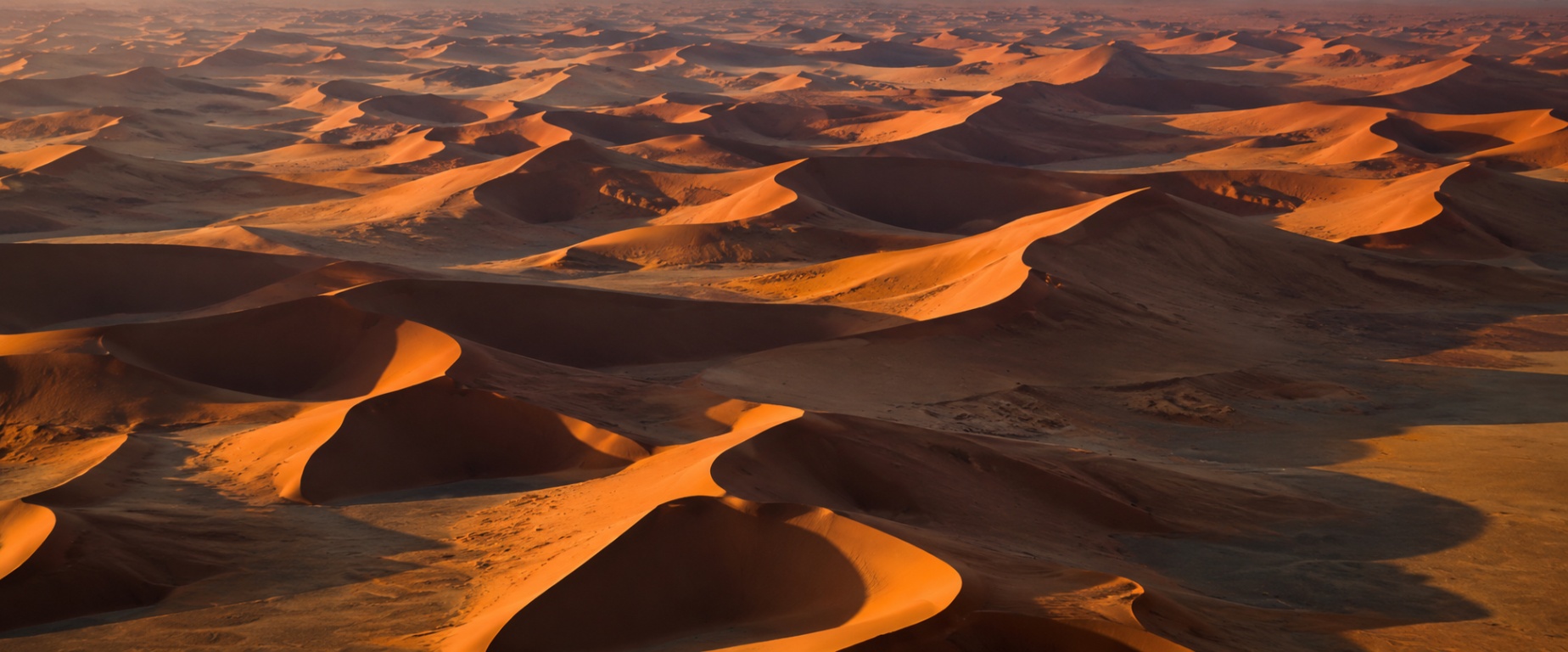
From above, the dunes stretch across the landscape like waves frozen in time. The path of the Tsauchab River becomes visible, winding through the desert before disappearing amongst the sands. White clay pans stand out against the red dunes, while patterns created by light and shadow reveal details often missed from below.

While Sossusvlei is remarkable from the ground, the air reveals a completely different perspective.

It is from the air that the true scale of Sossusvlei becomes apparent. The relationship between dune, river, and pan is easier to understand, and the vastness of the Namib Desert reveals itself in a way that few other viewpoints can offer.
Places to Explore
ABOUT THE AUTHOR

Picture of admin

admin

Aviation is more than our business — it’s our passion. We connect people, places, and possibilities across the vast and beautiful landscapes of Namibia.

“There is a quiet resilience that seems to live in the land. It is present in the people, too.”

Related Post

Spitzkoppe

5 min read

Swakopmund

5 min read

Welwitschia

5 min read

Sossusvlei

5 min read