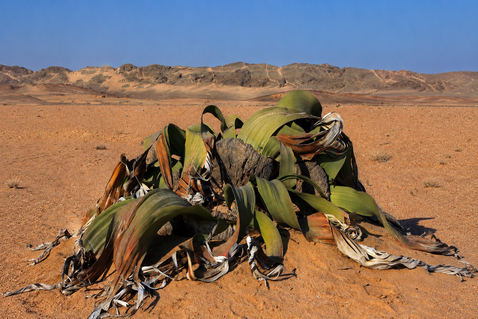
Found only in the Namib Desert of Namibia and southern Angola, Welwitschia mirabilis is unlike any other plant on Earth. In Namibia, it is most commonly found on the gravel plains between Swakopmund and Uis, particularly within the Welwitschia Plains east of Swakopmund, where visitors can observe specimens growing naturally in their desert environment.
For many travellers, encountering a Welwitschia for the first time changes their understanding of the Namib Desert. It is a reminder that life can adapt and thrive in places where survival seems almost impossible.
Interesting Facts
It Grows Only Two Leaves
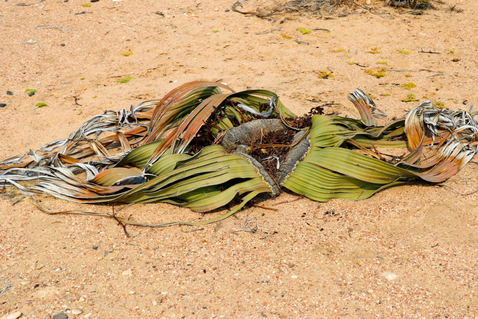
Throughout its entire life, a Welwitschia produces only two leaves. These continue growing from the base year after year and gradually split, twist, and fray in the desert wind.
Some Specimens Are More Than 1,000 Years Old
Many Welwitschias are believed to be several centuries old, while some of the oldest specimens may exceed 1,500 years in age.
Found Nowhere Else
Welwitschia occurs naturally only in the Namib Desert of Namibia and southern Angola.
It Often Appears Dead
Many first-time visitors mistake the plant for a dead or dying shrub. In reality, even the oldest specimens remain alive and continue growing throughout their lifespan.
A Living Fossil
The Welwitschia belongs to an ancient group of seed-producing plants and has survived largely unchanged for millions of years.
It Survives on Fog
In addition to occasional rainfall, Welwitschia relies on moisture from coastal fog and dew, an important adaptation in one of the driest regions on Earth.
Male and Female Plants Are Separate
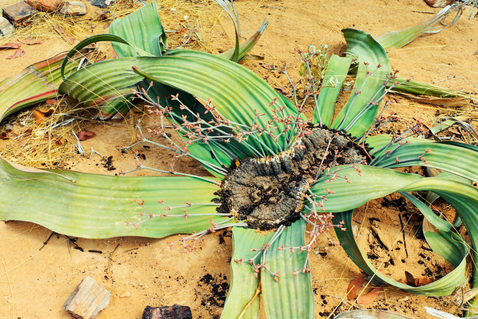
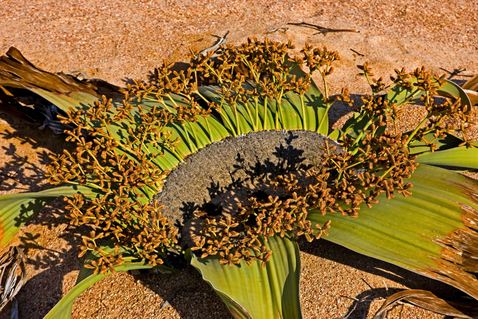
Unlike many flowering plants, individual Welwitschias are either male or female.
A Remarkable Root System
The plant develops a deep taproot and extensive root network that helps it access moisture below the surface.
It Can Grow Wider Than It Is Tall
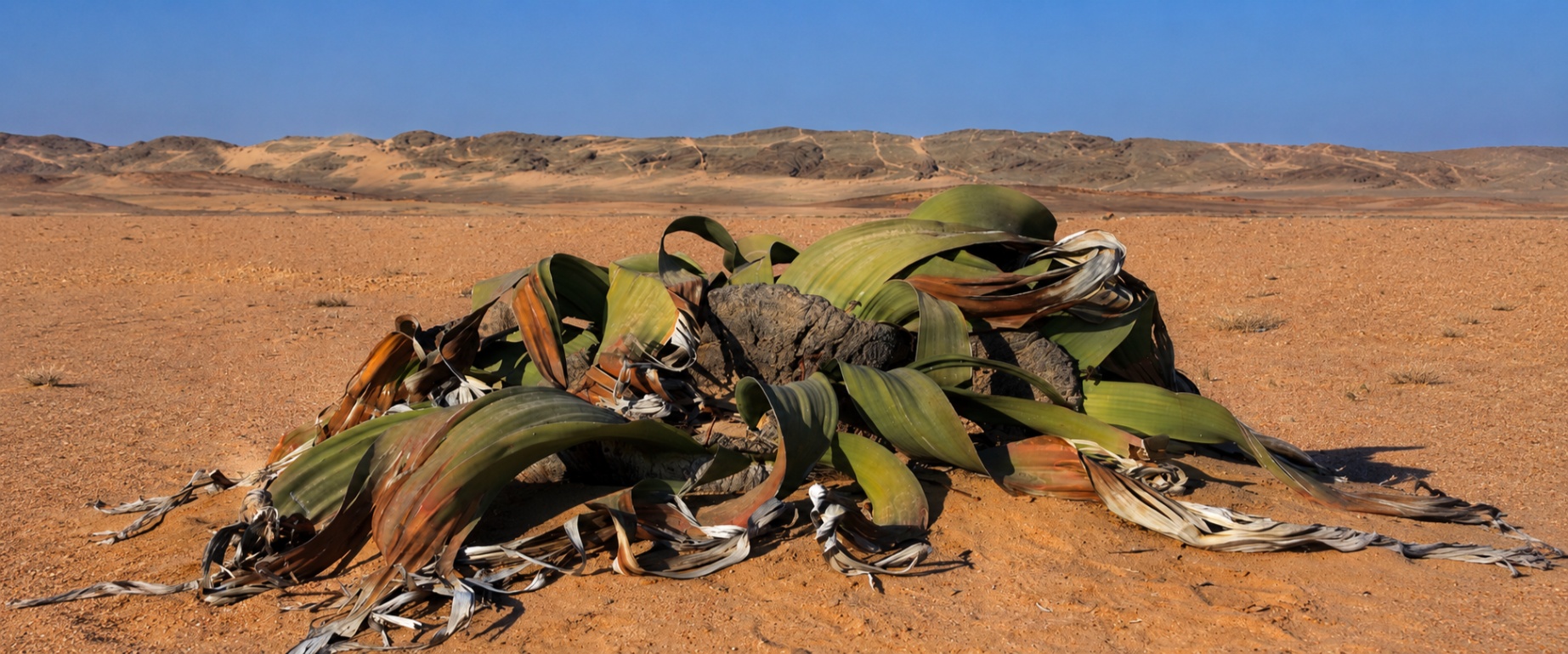
Although the woody stem remains close to the ground, mature plants can spread several metres across the desert floor.
Namibia's National Plant
Welwitschia is protected by law and is recognised as one of Namibia's most distinctive and important plant species.
The Story of Welwitschia
The Welwitschia was first described by Austrian botanist Friedrich Welwitsch in 1859 after he encountered the plant in present-day Angola. Its unusual appearance fascinated him, and it has continued to intrigue scientists ever since.
The Welwitschia was first described by Austrian botanist Friedrich Welwitsch in 1859 after he encountered the plant in present-day Angola. Its unusual appearance fascinated him, and it has continued to intrigue scientists ever since.
The plant grows from a short woody stem that remains close to the ground. Rather than producing new leaves throughout its life, it relies on just two leaves that continue growing for centuries. Over time, the harsh desert environment tears and twists these leaves into the tangled forms that have become its trademark.
Its survival strategy is equally remarkable. Coastal fog drifting inland from the Atlantic Ocean provides a valuable source of moisture, while an extensive root system allows the plant to make the most of every drop of water available. These adaptations have allowed the Welwitschia to endure in a landscape where many other plants would struggle to survive.
Today, the Welwitschia remains one of Namibia's most remarkable natural treasures and a symbol of resilience in the Namib Desert.
"The plant was the most wonderful thing I had ever seen."
— Friedrich Welwitsch, upon encountering the Welwitschia in 1859