Fish River Canyon Not Just Another Canyon

Not Just Another Canyon Few places in Namibia reveal the sheer scale of the country's landscapes quite like Fish River Canyon.

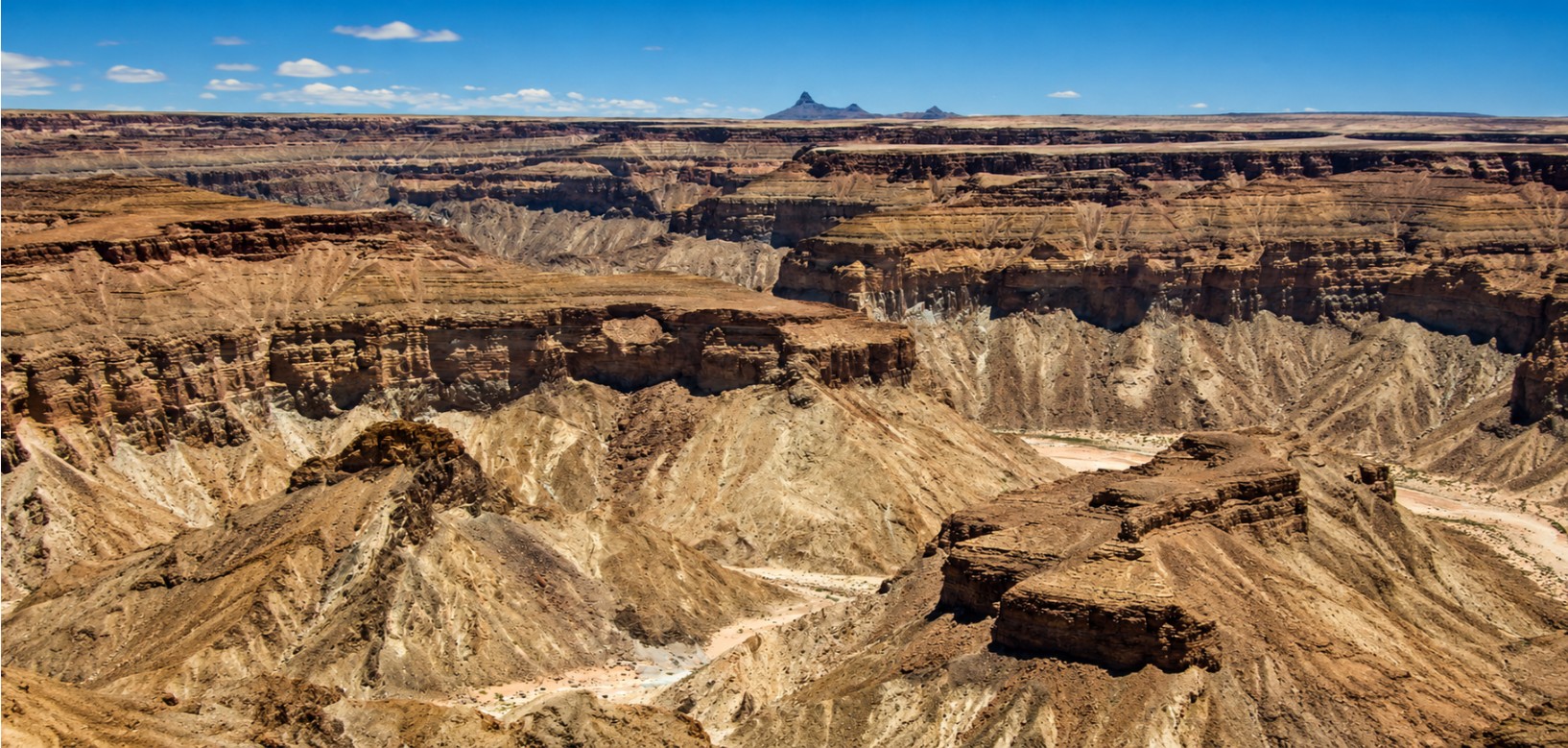
Located in the far south of Namibia, Fish River Canyon is the largest canyon in Africa and is widely regarded as the second-largest canyon in the world. Stretching for approximately 160 kilometres through a rugged and remote landscape, it was shaped over millions of years by geological activity and the steady work of the Fish River.

While photographs capture its dramatic scenery, nothing quite compares to standing on the rim and watching the canyon unfold into the distance. Layers of exposed rock, winding riverbeds, and changing colours tell a story that spans hundreds of millions of years.

Whether viewed from a lookout point, explored on foot, or experienced from the air, Fish River Canyon remains one of Namibia's most remarkable natural attractions.

Why Visit Fish River Canyon?

Fish River Canyon offers a side of Namibia that is very different from the dunes of the Namib Desert or the wildlife-rich plains of Etosha.
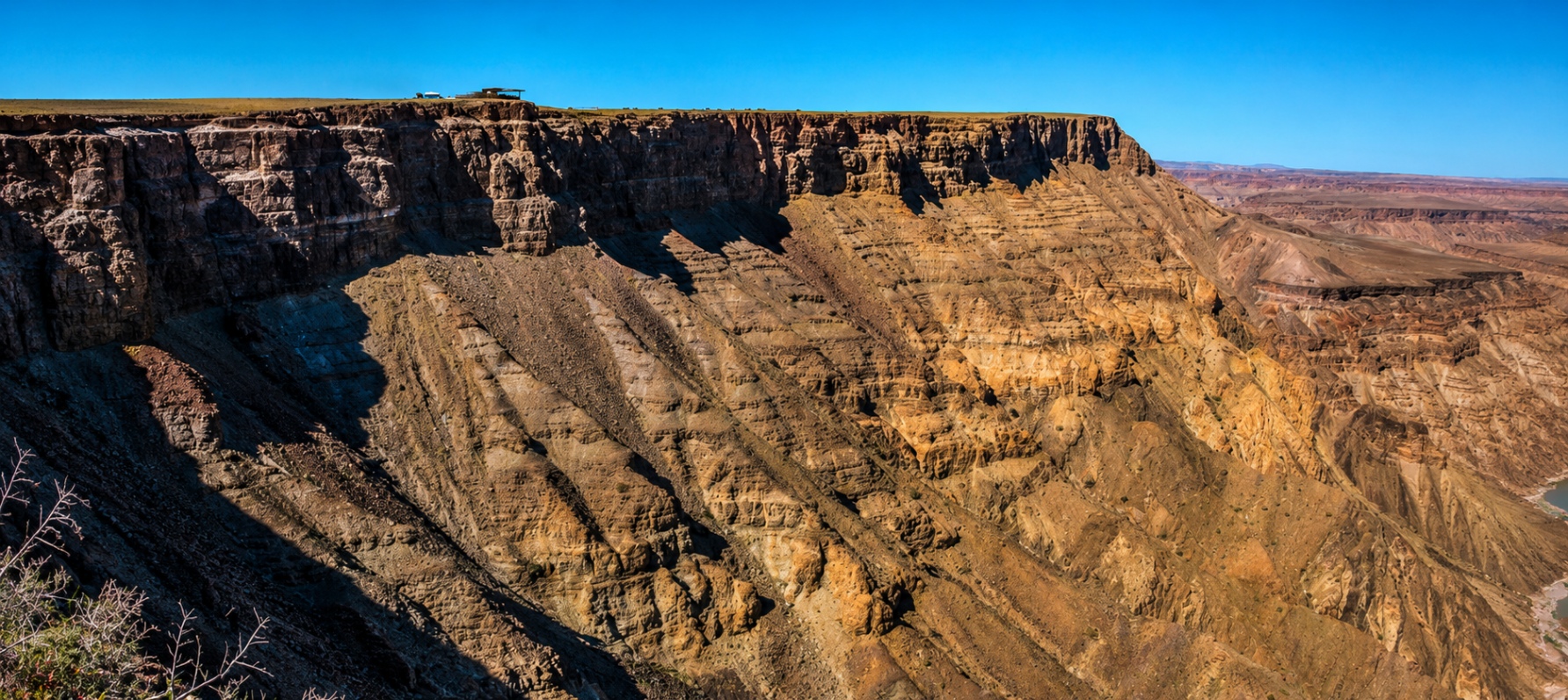
Visitors come to experience one of Africa’s greatest geological wonders, to stand at viewpoints overlooking the canyon, and to witness a landscape shaped over millions of years by the forces of water, erosion, and geological change.
The canyon reveals something different throughout the day. Early morning light softens the cliffs, midday highlights the textures and colours of the rock formations, and sunset casts long shadows across the canyon floor.
Whether you are a photographer, hiker, nature lover, or simply someone who appreciates wide open spaces, Fish River Canyon offers a perspective that few destinations can match.

Interesting Facts

Largest Canyon in Africa

Fish River Canyon is the largest canyon in Africa and is widely regarded as the second-largest canyon in the world.

More Than 160 Kilometres Long

The canyon stretches for approximately 160 kilometres through southern Namibia.

Up to 550 Metres Deep

In certain sections, the canyon reaches depths of more than 500 metres.

Namibia's Longest River

The Fish River is the longest river entirely within Namibia and remains the natural force responsible for shaping the canyon.

Home to a World-Famous Hiking Trail

The Fish River Canyon Hiking Trail is considered one of Africa's premier multi-day hiking routes and attracts adventurers from around the globe.

Ai-Ais Hot Springs

Located near the southern end of the canyon, Ai-Ais is known for its natural thermal springs and serves as a popular destination for travellers and hikers alike.

A Landscape Millions of Years in the Making

The canyon was formed through a combination of geological faulting, erosion, and the action of the Fish River over millions of years.

Why Visit Fish River Canyon?
The story of Fish River Canyon began long before the canyon itself existed.
Around 300 million years ago, geological activity created a large fault line in the region. As sections of the landscape gradually subsided, a broad valley formed. Over time, the Fish River and natural erosion slowly deepened and widened this valley, creating the canyon visible today.
The exposed rock layers throughout the canyon reveal a remarkable record of southern Africa’s geological history. Each layer tells part of a story that stretches back hundreds of millions of years and provides insight into how the landscape has evolved through time.
Although Fish River Canyon appears ancient and unchanging, the natural forces that shaped it continue today. Seasonal floods, erosion, and weathering still influence the landscape, reminding visitors that nature’s work is never truly complete.

Best Seen From Above

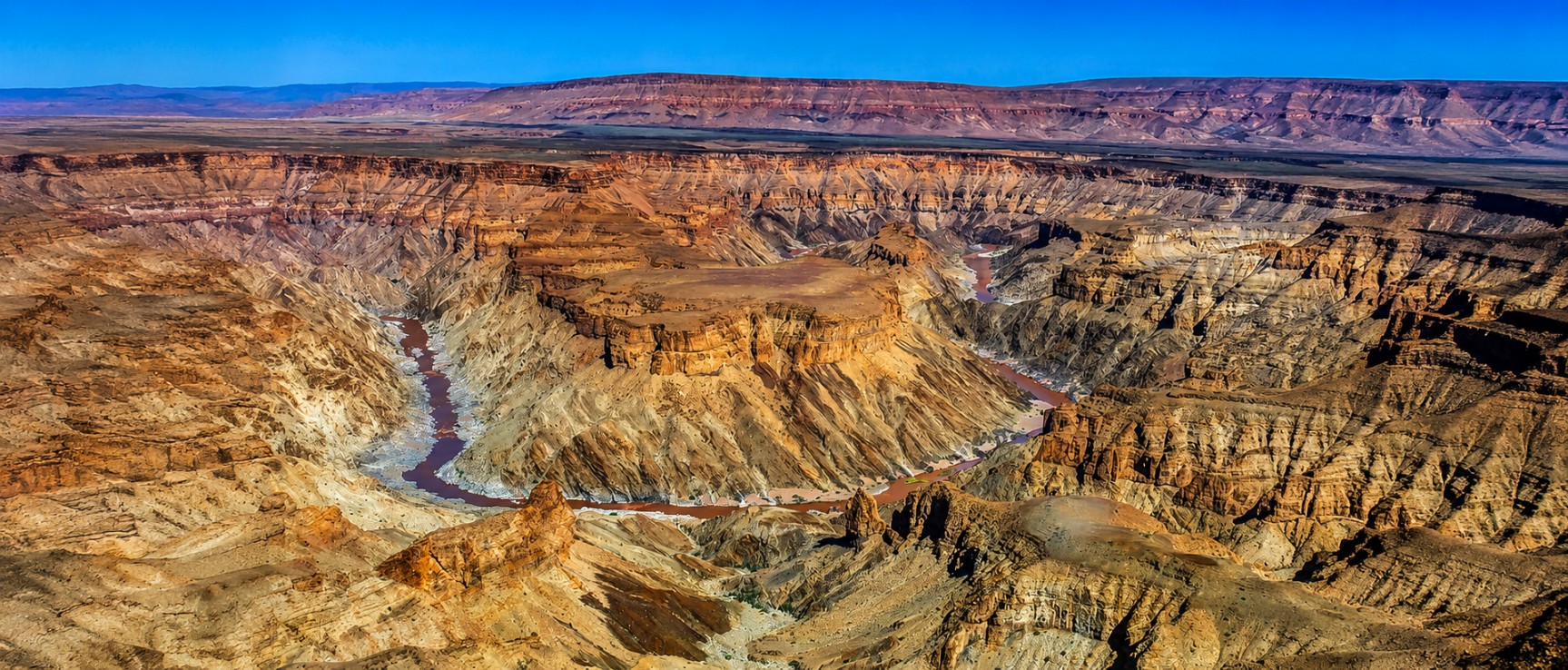
While the viewpoints along the canyon rim offer spectacular perspectives, the true scale of Fish River Canyon only becomes fully apparent from the air.
From above, the winding route of the Fish River can be traced through the canyon below, revealing massive bends, hidden valleys, steep rock faces, and geological formations that are difficult to appreciate from a single viewpoint.
The aerial perspective allows visitors to understand the relationship between the river and the landscape while showcasing the immense size of one of Africa’s most impressive natural landmarks.

ABOUT THE AUTHOR

Picture of admin

admin

Aviation is more than our business — it’s our passion. We connect people, places, and possibilities across the vast and beautiful landscapes of Namibia.

“There is a quiet resilience that seems to live in the land. It is present in the people, too.”

Related Post

Spitzkoppe

5 min read

Swakopmund

5 min read

Welwitschia

5 min read

Sossusvlei

5 min read