The Dry River valleys of Namibia

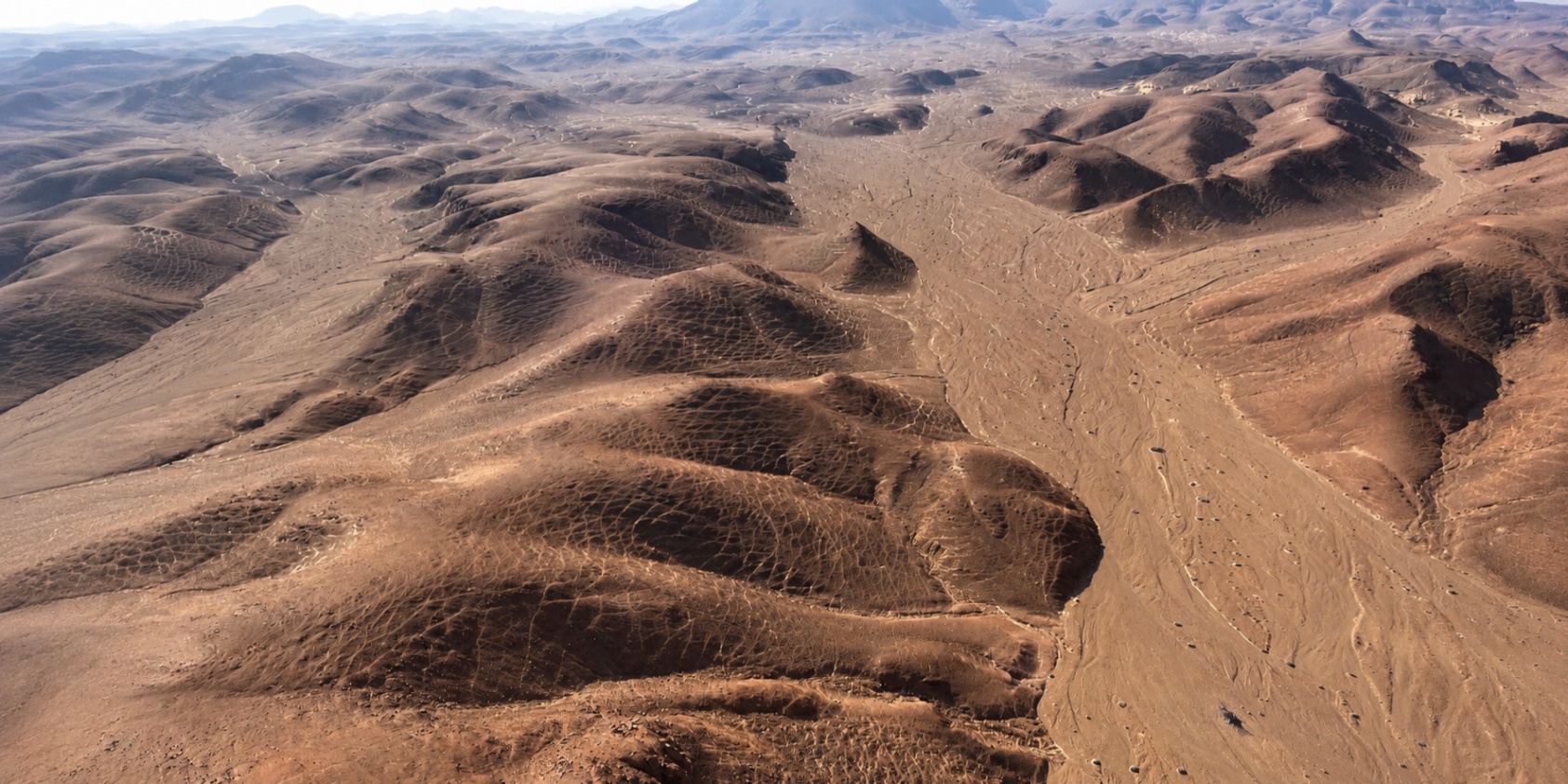
The Dry River Valleys of Namibia From the air, Namibia's dry river valleys carve their way through mountains, deserts and plains. What appears to be little more than sand is, in reality, a lifeline that sustains wildlife, vegetation and life itself across some of the country's most remote landscapes.

The Dry River Valleys of Namibia
To many, Namibia is simply a country of deserts. Endless horizons, towering dunes and rugged mountains often dominate the image people have of our country. But look a little closer and you will discover that Namibia is actually framed by water on three sides.

To the south, the Orange River forms the border between Namibia and South Africa. To the west lies the mighty Atlantic Ocean, shaped by the cold Benguela Current, and to the north flows the powerful Kunene River, which also serves as the border between Namibia and Angola.

Yet beyond these permanent water sources lies one of Namibia's most fascinating natural features: its countless dry river valleys.

More then Just Sand

From the air, especially during a fly-in safari, these sandy channels are impossible to miss. They weave their way across the landscape, cutting through mountains, deserts and plains before disappearing into the horizon. To many visitors, they appear to be little more than open spaces where animal tracks can easily be spotted. But to Namibia and Namibians, these river valleys are much more. It is no wonder that Heinz A. Klein-Werner wrote in his proudly Namibian song:

"Hart wie Kameldornholz ist unser Land und trocken sind seine Riviere."
"As hard as camelthorn wood is our land, and dry are its rivers."

He wrote those words in celebration. After all, who writes songs about dry riverbeds? Yet generations of Namibians have proudly sung along because we understand what these rivers represent.

Life Line In The Desert

Although dry river valleys can be found throughout the country, some of the most remarkable are found in north-western Namibia, particularly in Damaraland and Kaokoland. Here, vast ephemeral river systems carve their way through some of the most remote and dramatic landscapes in Southern Africa.

Unlike permanent rivers, ephemeral rivers flow only after seasonal rains. For most of the year they remain dry, appearing as broad sandy valleys winding through rugged mountains and endless gravel plains. Rivers such as the Aba Huab, Huab, Hoanib and Hoarusib are among the most well-known examples and have shaped these landscapes for thousands of years.

At first glance, these riverbeds may seem dry and lifeless. In reality, they are some of the most important lifelines in the region.

At first glance, these riverbeds may seem dry and lifeless. In reality, they are some of the most important lifelines in the region.

Beneath the surface, moisture remains trapped within the sand long after the rains have disappeared. This hidden water source allows trees and vegetation to thrive where they otherwise could not. Towering Ana trees and camelthorn trees line the riverbeds, creating ribbons of green through an otherwise harsh environment.

The tallest trees grow there. The freshest vegetation survives there. Before long, the animals arrive too.

Elephant paths weave through the sand as generations have followed the same routes in search of food and water. Giraffe browse among the trees while springbok and oryx rarely stray far from these green corridors. Predators are never far behind, knowing that where the river goes, life follows.

The north-western regions of Namibia are renowned for their desert-adapted wildlife, and nowhere is this adaptation more evident than along the ephemeral rivers. Desert-adapted elephants travel vast distances between food and water sources, often digging into the sand to access hidden groundwater. Living in smaller family groups than their counterparts elsewhere in Africa, they have adapted remarkably to survive in one of the harshest environments on Earth.

Equally remarkable are the desert-adapted lions of the region. Living in landscapes where prey can be scarce and distances immense, they have learned to survive in conditions few would associate with lions.

Yet it is not only wildlife that has adapted to these river valleys.

For travelers and photographers, these dry river valleys offer an experience unlike anywhere else in Namibia. The wildlife does not stand apart from the landscape; it becomes part of it. Animals blend seamlessly into the colors and textures of their surroundings. The vastness of the scenery, the silence of the wilderness and the feeling of remoteness combine to create something truly unforgettable.

For those exploring Damaraland and Kaokoland, the river valleys often become natural guides through the landscape. Follow a river and you will likely find vegetation, wildlife and some of the region's most spectacular scenery. What appears from above to be a simple sandy channel is often the very heart of the landscape below.

Perhaps that is why Namibians hold such affection for their dry rivers. We understand that they are not empty. They are living systems that sustain wildlife, support communities and shape entire ecosystems.

What appears from a distance to be nothing more than a dry stretch of sand is, in reality, one of Namibia's greatest lifelines.

And perhaps that is exactly what Heinz A. Klein-Werner understood when he proudly sang that Namibia's rivers are dry.

ABOUT THE AUTHOR

Picture of admin

admin

Aviation is more than our business — it’s our passion. We connect people, places, and possibilities across the vast and beautiful landscapes of Namibia.

“There is a quiet resilience that seems to live in the land. It is present in the people, too.”

Related Post

Spitzkoppe

5 min read

Swakopmund

5 min read

Welwitschia

5 min read

Sossusvlei

5 min read