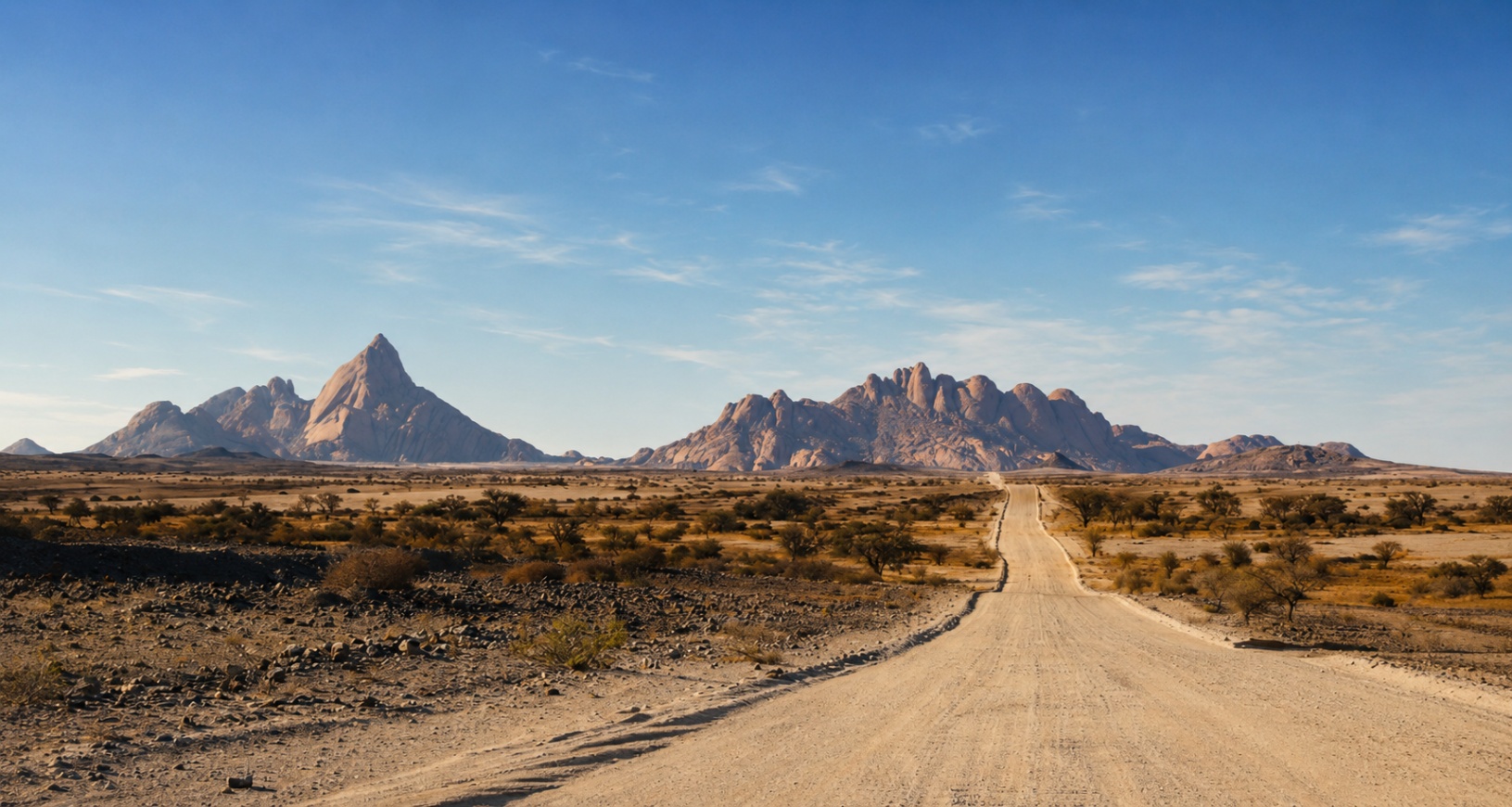
Spitzkoppe

Rising dramatically from the Namib Desert in Namibia's Erongo Region, this remarkable group of granite peaks has become one of Namibia's most photographed natural landmarks. Visible from great distances, Spitzkoppe appears almost out of place against the surrounding landscape. What makes it particularly remarkable is how dramatically its appearance changes depending on where it is viewed from. From one angle it resembles a sharply pointed peak, while from another it reveals a collection of granite domes, ridges, and rock formations shaped by millions of years of geological history.

Located between Usakos and Swakopmund, Spitzkoppe attracts photographers, hikers, climbers, and travellers seeking some of Namibia's most dramatic scenery. Yet beyond its iconic silhouette lies a landscape of ancient rock formations, natural arches, hidden valleys, and San rock art that reveals a much deeper story.

Why Visit Spitzkoppe?

Spitzkoppe offers some of Namibia's most distinctive scenery.

Visitors come to admire the granite peaks, photograph the famous rock arch, explore ancient San rock art sites, and experience a landscape unlike any other in the country. The changing light throughout the day transforms the colours of the granite, making sunrise and sunset particularly memorable.

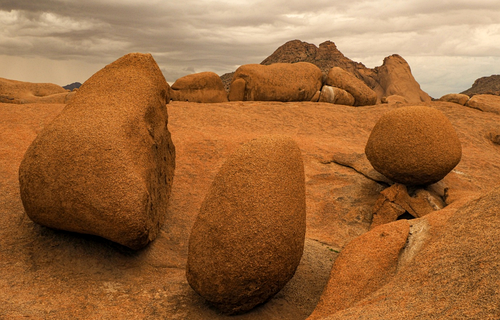
Unlike many destinations, Spitzkoppe rewards exploration. Hidden amongst the rocky outcrops are natural arches, balancing boulders, secluded viewpoints, and traces of the people who lived here thousands of years ago.
Interesting Facts

The Matterhorn of Namibia

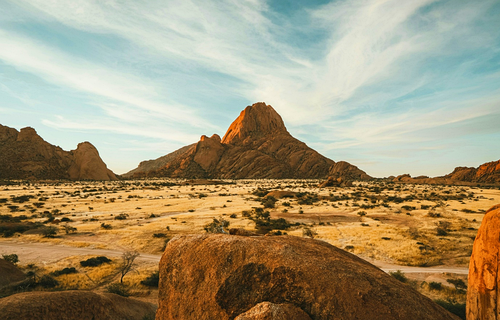
Spitzkoppe is often referred to as the "Matterhorn of Namibia" due to its dramatic profile and isolated appearance above the surrounding plains.

More Than 120 Million Years Old

Geological studies suggest that the granite formations of Spitzkoppe are more than 120 million years old, making them among the oldest exposed rock formations in Namibia.

The Name Means "Pointed Dome"

The name Spitzkoppe originates from German and translates roughly to "pointed dome", a fitting description for the mountain's distinctive profile.

A Group of Peaks

Although often referred to as a single mountain, Spitzkoppe is actually a group of granite peaks and inselbergs. Nearby, the Little Spitzkoppe rises to approximately 1,557 metres above sea level, while the Pontok Mountains form part of the wider landscape.

Rising Above the Plains

The highest peak reaches approximately 1,728 metres above sea level and stands nearly 700 metres above the surrounding desert floor.

Home to Ancient San Rock Art

Several rock shelters around Spitzkoppe contain paintings created by the San people, offering a glimpse into Namibia's earliest human history.

The Famous Rock Arch

One of Namibia's most photographed natural features, the Spitzkoppe Arch has become an iconic symbol of the region.

A Haven for Stargazing

With minimal light pollution and vast open skies, Spitzkoppe offers some of the clearest stargazing opportunities in Namibia.

The Story of Spitzkoppe

The story of Spitzkoppe began long before the landscape visible today existed.

Geological studies suggest that the granite formations of Spitzkoppe were formed more than 120 million years ago when molten rock cooled beneath the Earth's surface. Over millions of years, erosion gradually removed the surrounding rock, revealing the striking peaks visible today.

Wind, weather, and time continued shaping the landscape, creating the arches, domes, balancing boulders, and rugged rock formations that characterise Spitzkoppe today. The result is a landscape that appears both dramatic and timeless, standing apart from the surrounding desert plains.

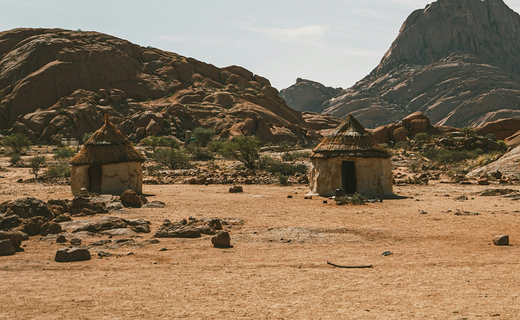
Long before modern travellers arrived, the San people recognised the significance of the area. Rock paintings found throughout Spitzkoppe provide evidence of human presence stretching back thousands of years and remain an important part of Namibia's cultural heritage. These paintings offer a valuable glimpse into the lives, beliefs, and traditions of some of the region's earliest inhabitants.

Later, German settlers named the formation Spitzkoppe, meaning "pointed dome", inspired by its unmistakable silhouette rising above the surrounding plains. The name has endured, becoming synonymous with one of Namibia's most recognisable natural landmarks.

Today, Spitzkoppe remains a favourite destination for photographers, climbers, adventurers, and nature lovers. Its distinctive profile has become an enduring symbol of Namibia's geological diversity and natural beauty.
The Story of Spitzkoppe

While exploring Spitzkoppe on foot reveals its impressive scale and intricate rock formations, the aerial perspective tells a different story.
From above, it becomes clear why Spitzkoppe is often described as an island of granite rising from a sea of desert plains. The peaks stand apart from the surrounding landscape, their weathered domes and rugged ridges creating a striking contrast against the open terrain below.
This constantly changing character becomes even more apparent from the air. As the landscape unfolds below, Spitzkoppe reveals a different profile from every angle, highlighting why it has fascinated photographers, artists, climbers, and pilots for generations.
The network of valleys, hidden gullies, granite domes, and surrounding mountain ranges becomes visible in a way that is impossible to appreciate from a single viewpoint on the ground. From the skies, the relationship between Spitzkoppe, the Pontok Mountains, and the wider Namib landscape comes into focus.
Seen from the skies, Spitzkoppe reveals itself not simply as a mountain, but as one of Namibia’s most remarkable geological landmarks.

Swakopmund

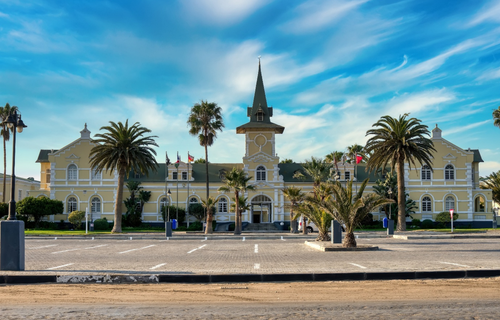
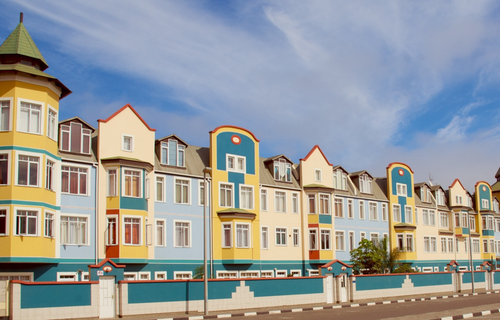
Situated between the Atlantic Ocean and the Namib Desert, Swakopmund appears almost unexpectedly along the coastline. Approached from the desert interior, its palm-lined streets, historic buildings, church towers, and seaside promenades seem remarkably out of place against the surrounding landscape.

Founded in 1892, Swakopmund has grown from a small harbour settlement into one of Namibia's most beloved destinations. Today, visitors are drawn by its rich history, cooler coastal climate, distinctive architecture, vibrant cafés and restaurants, and easy access to some of the country's most remarkable natural attractions.

Whether you are exploring its historic streets, enjoying fresh seafood overlooking the Atlantic, browsing local galleries, or venturing into the surrounding desert, Swakopmund offers a side of Namibia unlike anywhere else in the country.

Why Visit Swakopmund?

Swakopmund combines many of Namibia's most memorable experiences in one destination.

The Atlantic Ocean, the Namib Desert, rich history, adventure activities, galleries, cafés, restaurants, and coastal culture all exist within easy reach of one another. Few places allow visitors to experience such variety within a single day.

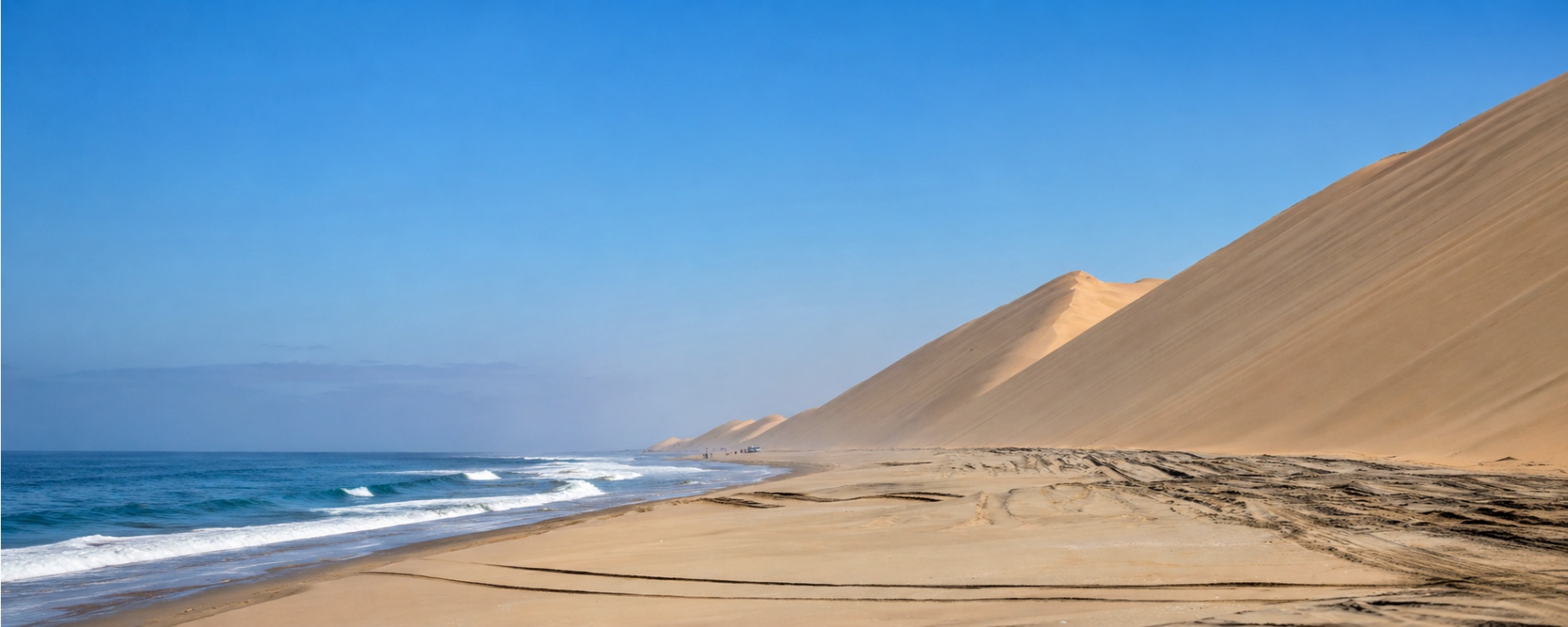
The town is also an excellent base from which to explore the surrounding region. The Welwitschia Plains, Moon Landscape, Sandwich Harbour, Cape Cross Seal Reserve, and numerous desert attractions can all be reached from Swakopmund.

Beyond its natural surroundings, Swakopmund has become one of Namibia's cultural centres. Art galleries, craft markets, local jewellery workshops, museums, and historic buildings invite visitors to slow down and experience a different side of the country.

Yet perhaps its greatest attraction is its atmosphere. Visitors often arrive intending to stay for a day or two and leave wishing they had spent longer.

Interesting Facts

Founded in 1892

Swakopmund was established by German colonial authorities as a harbour settlement and quickly became an important gateway to Namibia's interior.

Between Desert and Ocean

Few towns in the world are positioned between a vast desert and a cold Atlantic coastline quite like Swakopmund.

Influenced by the Benguela Current

The cold Benguela Current moderates temperatures along the coast and creates the fog that frequently drifts inland across the Namib Desert.

Home to Historic Landmarks

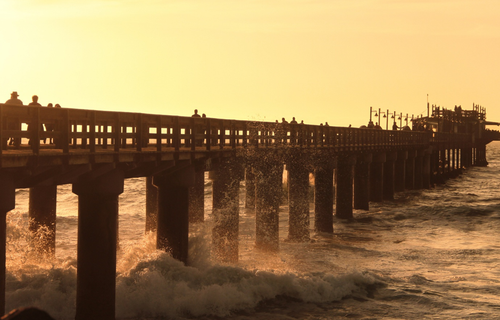
The Woermannhaus, Woermann Tower, Lighthouse, Swakopmund Railway Station, State House, Evangelical Lutheran Church, The Mole, and Old Iron Jetty remain important reminders of the town's past.

A Town of Crafts and Creativity

Swakopmund is known for its galleries, jewellery workshops, local textiles, artisan markets, and thriving creative community.

The Swakopmund Museum

One of Namibia's most important museums, it showcases natural history, archaeology, geology, indigenous cultures, and the history of the country's coastline.

Adventure on Land, Sea and Sky

The surrounding desert and coastline provide opportunities for quad biking, sandboarding, skydiving, fishing, marine cruises, and numerous other outdoor activities.

Gateway to the Namib

Many of Namibia's best-known attractions, including the Welwitschia Plains, Moon Landscape, Sandwich Harbour, and Cape Cross Seal Reserve, are easily accessible from the town.

The Story of Swakopmund

The story of Swakopmund begins with Germany's search for a harbour along the south-west African coast.

In the late nineteenth century, German colonial authorities required a port that would provide access to the interior of what was then German South West Africa. In 1892, a settlement was established near the mouth of the Swakop River and quickly developed into an important transport and supply route.

Life on the coast was challenging. Heavy Atlantic surf made shipping difficult, while shifting sands and harsh environmental conditions constantly tested those tasked with building a town on the edge of the desert. Despite these obstacles, Swakopmund continued to grow and soon became one of the colony's most important settlements.

Many of the buildings that define Swakopmund today were constructed during this period. The Woermannhaus, completed in 1905, became one of the town's most recognisable landmarks and today houses the Swakopmund Arts Association and Public Library. The neighbouring Woermann Tower still offers panoramic views over the town and coastline.

The Swakopmund Railway Station served as an important link between the coast and the mining regions of the interior, helping connect the growing settlement to the rest of the country. Die Kaserne housed German engineering regiments responsible for constructing vital transport infrastructure, while other notable buildings, including the State House, Lighthouse, Evangelical Lutheran Church, and former district court, reflected the growing importance of the settlement.

The Mole, completed in 1903, was built in an effort to create a harbour for ships arriving from Europe. Nearby, the Old Iron Jetty became an important landing point for passengers and supplies. Although rough seas and coastal conditions limited the harbour's success, these structures remain among Swakopmund's most recognisable landmarks today.

The arrival of the railway transformed the town's fortunes, connecting the coast with inland settlements and helping establish Swakopmund as a commercial and administrative centre. Over time, its cooler climate, distinctive architecture, and coastal setting attracted visitors from across the region.

Today, much of Swakopmund's colonial heritage has been carefully preserved. Historic buildings now house museums, galleries, hotels, cafés, and businesses, while the town itself has evolved into one of Namibia's most popular destinations.

More than a century after its founding, Swakopmund continues to offer a unique blend of history, culture, desert landscapes, and Atlantic coastline that makes it unlike anywhere else in Namibia.