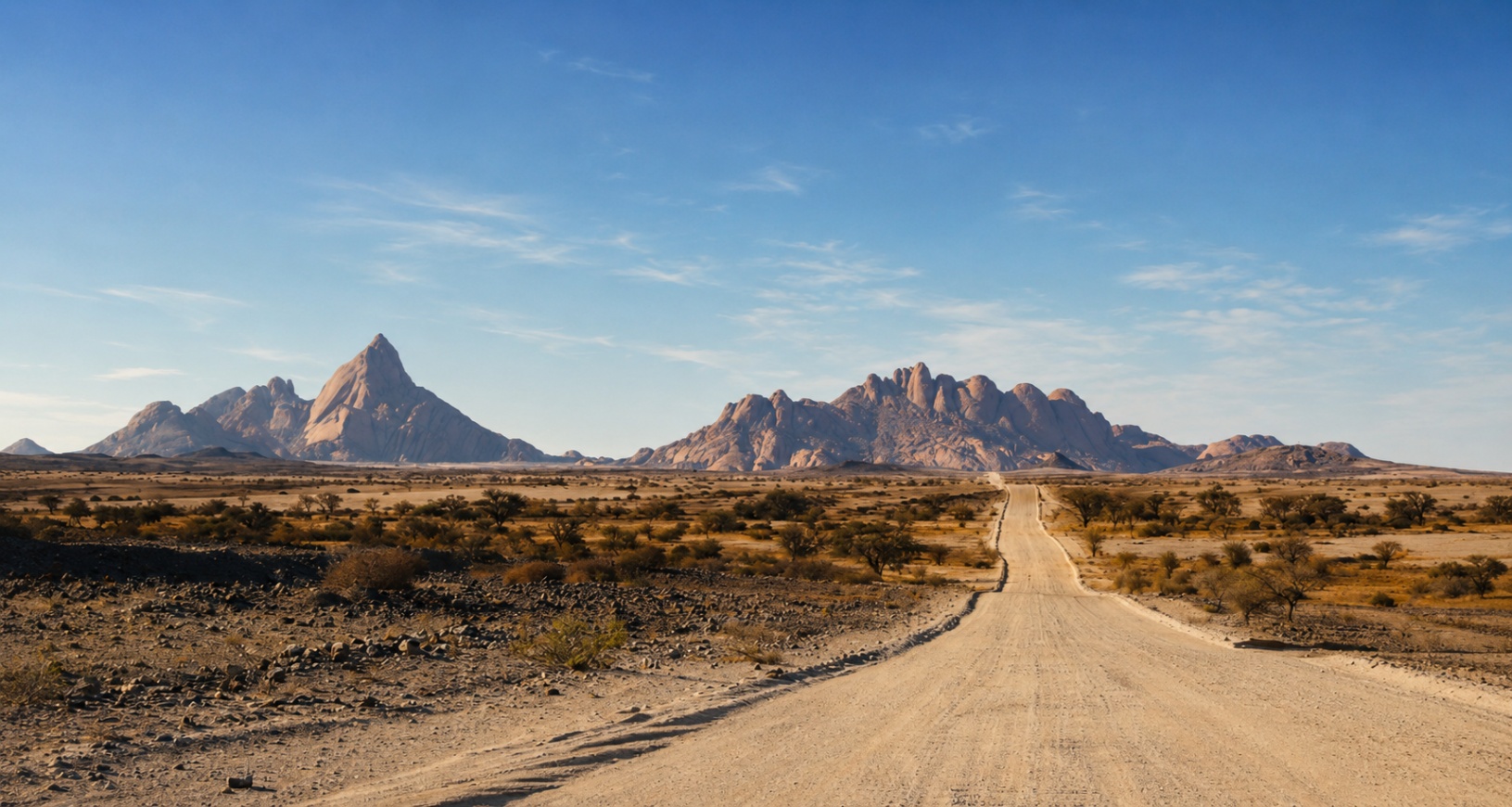
Spitzkoppe

Rising dramatically from the Namib Desert in Namibia's Erongo Region, this remarkable group of granite peaks has become one of Namibia's most photographed natural landmarks. Visible from great distances, Spitzkoppe appears almost out of place against the surrounding landscape. What makes it particularly remarkable is how dramatically its appearance changes depending on where it is viewed from. From one angle it resembles a sharply pointed peak, while from another it reveals a collection of granite domes, ridges, and rock formations shaped by millions of years of geological history.

Located between Usakos and Swakopmund, Spitzkoppe attracts photographers, hikers, climbers, and travellers seeking some of Namibia's most dramatic scenery. Yet beyond its iconic silhouette lies a landscape of ancient rock formations, natural arches, hidden valleys, and San rock art that reveals a much deeper story.

Why Visit Spitzkoppe?

Spitzkoppe offers some of Namibia's most distinctive scenery.

Visitors come to admire the granite peaks, photograph the famous rock arch, explore ancient San rock art sites, and experience a landscape unlike any other in the country. The changing light throughout the day transforms the colours of the granite, making sunrise and sunset particularly memorable.

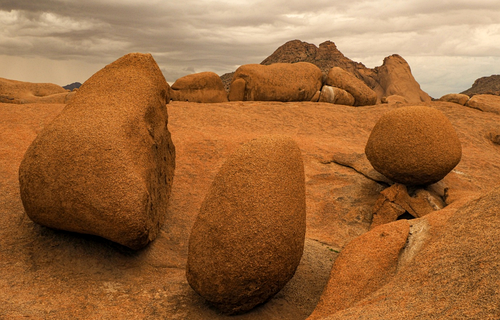
Unlike many destinations, Spitzkoppe rewards exploration. Hidden amongst the rocky outcrops are natural arches, balancing boulders, secluded viewpoints, and traces of the people who lived here thousands of years ago.
Interesting Facts

The Matterhorn of Namibia

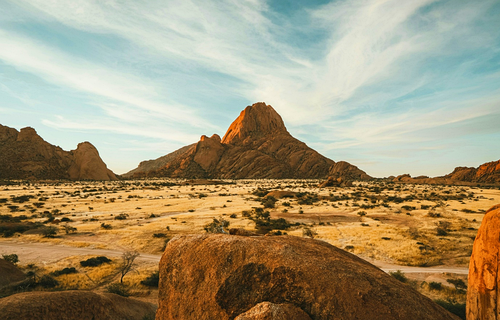
Spitzkoppe is often referred to as the "Matterhorn of Namibia" due to its dramatic profile and isolated appearance above the surrounding plains.

More Than 120 Million Years Old

Geological studies suggest that the granite formations of Spitzkoppe are more than 120 million years old, making them among the oldest exposed rock formations in Namibia.

The Name Means "Pointed Dome"

The name Spitzkoppe originates from German and translates roughly to "pointed dome", a fitting description for the mountain's distinctive profile.

A Group of Peaks

Although often referred to as a single mountain, Spitzkoppe is actually a group of granite peaks and inselbergs. Nearby, the Little Spitzkoppe rises to approximately 1,557 metres above sea level, while the Pontok Mountains form part of the wider landscape.

Rising Above the Plains

The highest peak reaches approximately 1,728 metres above sea level and stands nearly 700 metres above the surrounding desert floor.

Home to Ancient San Rock Art

Several rock shelters around Spitzkoppe contain paintings created by the San people, offering a glimpse into Namibia's earliest human history.

The Famous Rock Arch

One of Namibia's most photographed natural features, the Spitzkoppe Arch has become an iconic symbol of the region.

A Haven for Stargazing

With minimal light pollution and vast open skies, Spitzkoppe offers some of the clearest stargazing opportunities in Namibia.

The Story of Spitzkoppe

The story of Spitzkoppe began long before the landscape visible today existed.

Geological studies suggest that the granite formations of Spitzkoppe were formed more than 120 million years ago when molten rock cooled beneath the Earth's surface. Over millions of years, erosion gradually removed the surrounding rock, revealing the striking peaks visible today.

Wind, weather, and time continued shaping the landscape, creating the arches, domes, balancing boulders, and rugged rock formations that characterise Spitzkoppe today. The result is a landscape that appears both dramatic and timeless, standing apart from the surrounding desert plains.

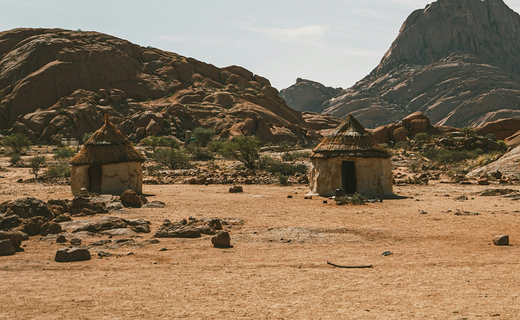
Long before modern travellers arrived, the San people recognised the significance of the area. Rock paintings found throughout Spitzkoppe provide evidence of human presence stretching back thousands of years and remain an important part of Namibia's cultural heritage. These paintings offer a valuable glimpse into the lives, beliefs, and traditions of some of the region's earliest inhabitants.

Later, German settlers named the formation Spitzkoppe, meaning "pointed dome", inspired by its unmistakable silhouette rising above the surrounding plains. The name has endured, becoming synonymous with one of Namibia's most recognisable natural landmarks.

Today, Spitzkoppe remains a favourite destination for photographers, climbers, adventurers, and nature lovers. Its distinctive profile has become an enduring symbol of Namibia's geological diversity and natural beauty.
The Story of Spitzkoppe

While exploring Spitzkoppe on foot reveals its impressive scale and intricate rock formations, the aerial perspective tells a different story.
From above, it becomes clear why Spitzkoppe is often described as an island of granite rising from a sea of desert plains. The peaks stand apart from the surrounding landscape, their weathered domes and rugged ridges creating a striking contrast against the open terrain below.
This constantly changing character becomes even more apparent from the air. As the landscape unfolds below, Spitzkoppe reveals a different profile from every angle, highlighting why it has fascinated photographers, artists, climbers, and pilots for generations.
The network of valleys, hidden gullies, granite domes, and surrounding mountain ranges becomes visible in a way that is impossible to appreciate from a single viewpoint on the ground. From the skies, the relationship between Spitzkoppe, the Pontok Mountains, and the wider Namib landscape comes into focus.
Seen from the skies, Spitzkoppe reveals itself not simply as a mountain, but as one of Namibia’s most remarkable geological landmarks.

Swakopmund

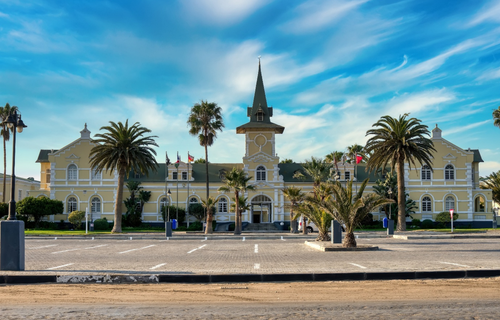
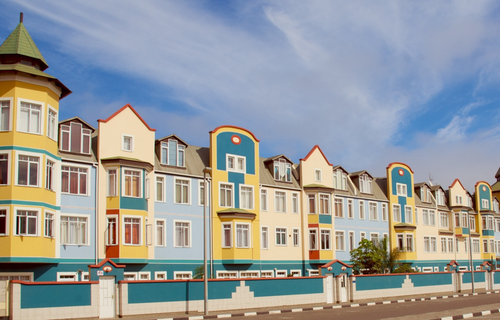
Situated between the Atlantic Ocean and the Namib Desert, Swakopmund appears almost unexpectedly along the coastline. Approached from the desert interior, its palm-lined streets, historic buildings, church towers, and seaside promenades seem remarkably out of place against the surrounding landscape.

Founded in 1892, Swakopmund has grown from a small harbour settlement into one of Namibia's most beloved destinations. Today, visitors are drawn by its rich history, cooler coastal climate, distinctive architecture, vibrant cafés and restaurants, and easy access to some of the country's most remarkable natural attractions.

Whether you are exploring its historic streets, enjoying fresh seafood overlooking the Atlantic, browsing local galleries, or venturing into the surrounding desert, Swakopmund offers a side of Namibia unlike anywhere else in the country.

Why Visit Swakopmund?

Swakopmund combines many of Namibia's most memorable experiences in one destination.

The Atlantic Ocean, the Namib Desert, rich history, adventure activities, galleries, cafés, restaurants, and coastal culture all exist within easy reach of one another. Few places allow visitors to experience such variety within a single day.

The town is also an excellent base from which to explore the surrounding region. The Welwitschia Plains, Moon Landscape, Sandwich Harbour, Cape Cross Seal Reserve, and numerous desert attractions can all be reached from Swakopmund.

Beyond its natural surroundings, Swakopmund has become one of Namibia's cultural centres. Art galleries, craft markets, local jewellery workshops, museums, and historic buildings invite visitors to slow down and experience a different side of the country.

Yet perhaps its greatest attraction is its atmosphere. Visitors often arrive intending to stay for a day or two and leave wishing they had spent longer.

Interesting Facts

Founded in 1892

Swakopmund was established by German colonial authorities as a harbour settlement and quickly became an important gateway to Namibia's interior.

Between Desert and Ocean

Few towns in the world are positioned between a vast desert and a cold Atlantic coastline quite like Swakopmund.

Influenced by the Benguela Current

The cold Benguela Current moderates temperatures along the coast and creates the fog that frequently drifts inland across the Namib Desert.

Home to Historic Landmarks

The Woermannhaus, Woermann Tower, Lighthouse, Swakopmund Railway Station, State House, Evangelical Lutheran Church, The Mole, and Old Iron Jetty remain important reminders of the town's past.

A Town of Crafts and Creativity

Swakopmund is known for its galleries, jewellery workshops, local textiles, artisan markets, and thriving creative community.

The Swakopmund Museum

One of Namibia's most important museums, it showcases natural history, archaeology, geology, indigenous cultures, and the history of the country's coastline.

Adventure on Land, Sea and Sky

The surrounding desert and coastline provide opportunities for quad biking, sandboarding, skydiving, fishing, marine cruises, and numerous other outdoor activities.

Gateway to the Namib

Many of Namibia's best-known attractions, including the Welwitschia Plains, Moon Landscape, Sandwich Harbour, and Cape Cross Seal Reserve, are easily accessible from the town.

The Story of Swakopmund

The story of Swakopmund begins with Germany's search for a harbour along the south-west African coast.

In the late nineteenth century, German colonial authorities required a port that would provide access to the interior of what was then German South West Africa. In 1892, a settlement was established near the mouth of the Swakop River and quickly developed into an important transport and supply route.

Life on the coast was challenging. Heavy Atlantic surf made shipping difficult, while shifting sands and harsh environmental conditions constantly tested those tasked with building a town on the edge of the desert. Despite these obstacles, Swakopmund continued to grow and soon became one of the colony's most important settlements.

Many of the buildings that define Swakopmund today were constructed during this period. The Woermannhaus, completed in 1905, became one of the town's most recognisable landmarks and today houses the Swakopmund Arts Association and Public Library. The neighbouring Woermann Tower still offers panoramic views over the town and coastline.

The Swakopmund Railway Station served as an important link between the coast and the mining regions of the interior, helping connect the growing settlement to the rest of the country. Die Kaserne housed German engineering regiments responsible for constructing vital transport infrastructure, while other notable buildings, including the State House, Lighthouse, Evangelical Lutheran Church, and former district court, reflected the growing importance of the settlement.

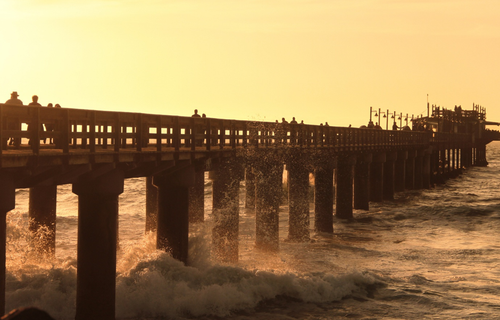
The Mole, completed in 1903, was built in an effort to create a harbour for ships arriving from Europe. Nearby, the Old Iron Jetty became an important landing point for passengers and supplies. Although rough seas and coastal conditions limited the harbour's success, these structures remain among Swakopmund's most recognisable landmarks today.

The arrival of the railway transformed the town's fortunes, connecting the coast with inland settlements and helping establish Swakopmund as a commercial and administrative centre. Over time, its cooler climate, distinctive architecture, and coastal setting attracted visitors from across the region.

Today, much of Swakopmund's colonial heritage has been carefully preserved. Historic buildings now house museums, galleries, hotels, cafés, and businesses, while the town itself has evolved into one of Namibia's most popular destinations.

More than a century after its founding, Swakopmund continues to offer a unique blend of history, culture, desert landscapes, and Atlantic coastline that makes it unlike anywhere else in Namibia.

Welwitschia

Found only in the Namib Desert of Namibia and southern Angola, Welwitschia mirabilis is unlike any other plant on Earth. In Namibia, it is most commonly found on the gravel plains between Swakopmund and Uis, particularly within the Welwitschia Plains east of Swakopmund, where visitors can observe specimens growing naturally in their desert environment.

For many travellers, encountering a Welwitschia for the first time changes their understanding of the Namib Desert. It is a reminder that life can adapt and thrive in places where survival seems almost impossible.

Interesting Facts

It Grows Only Two Leaves

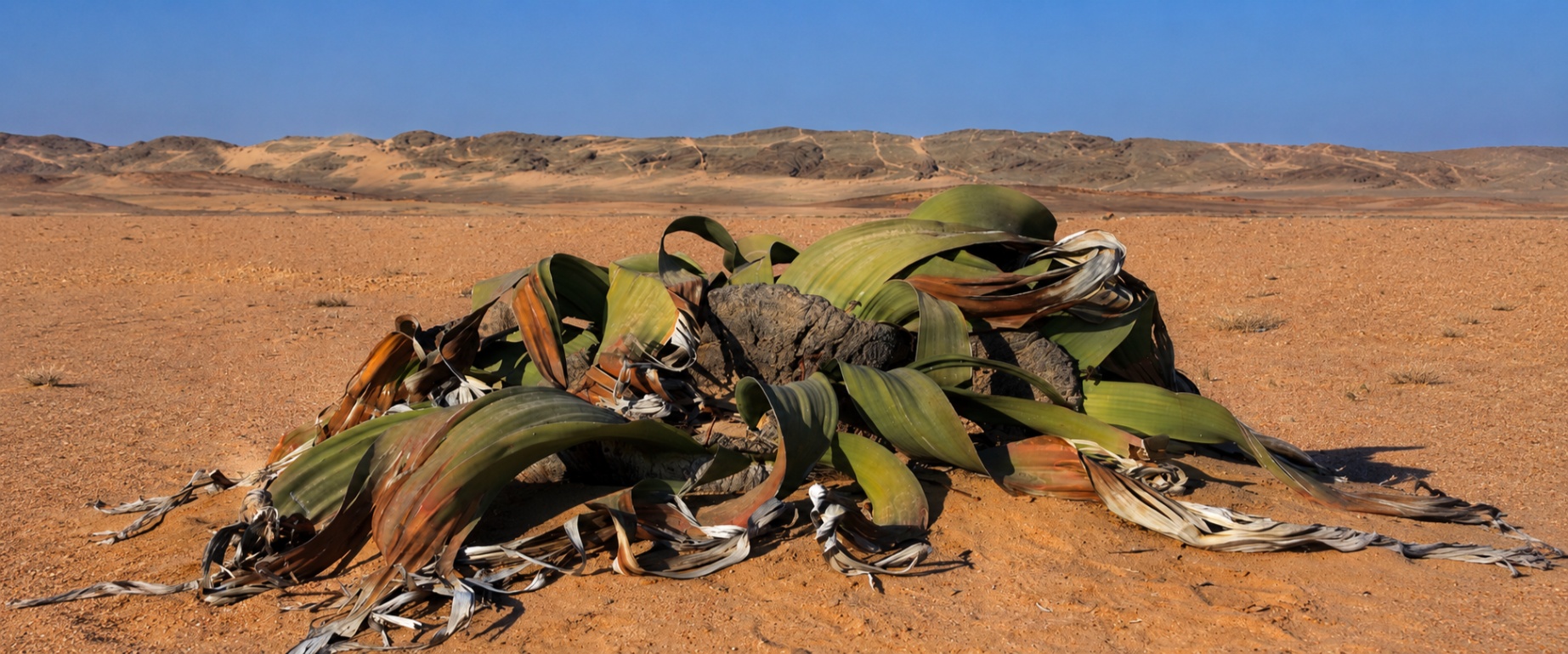
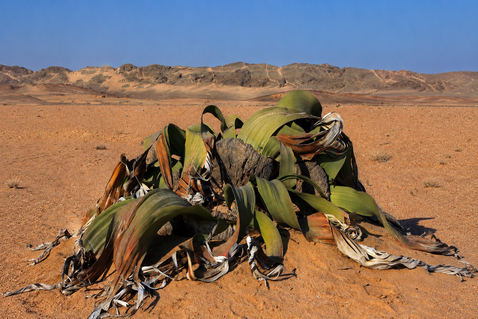
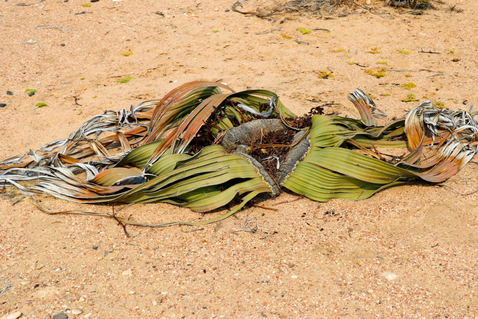
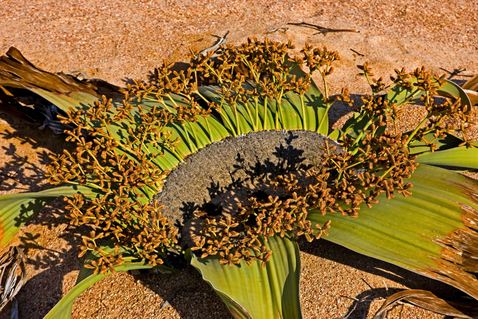
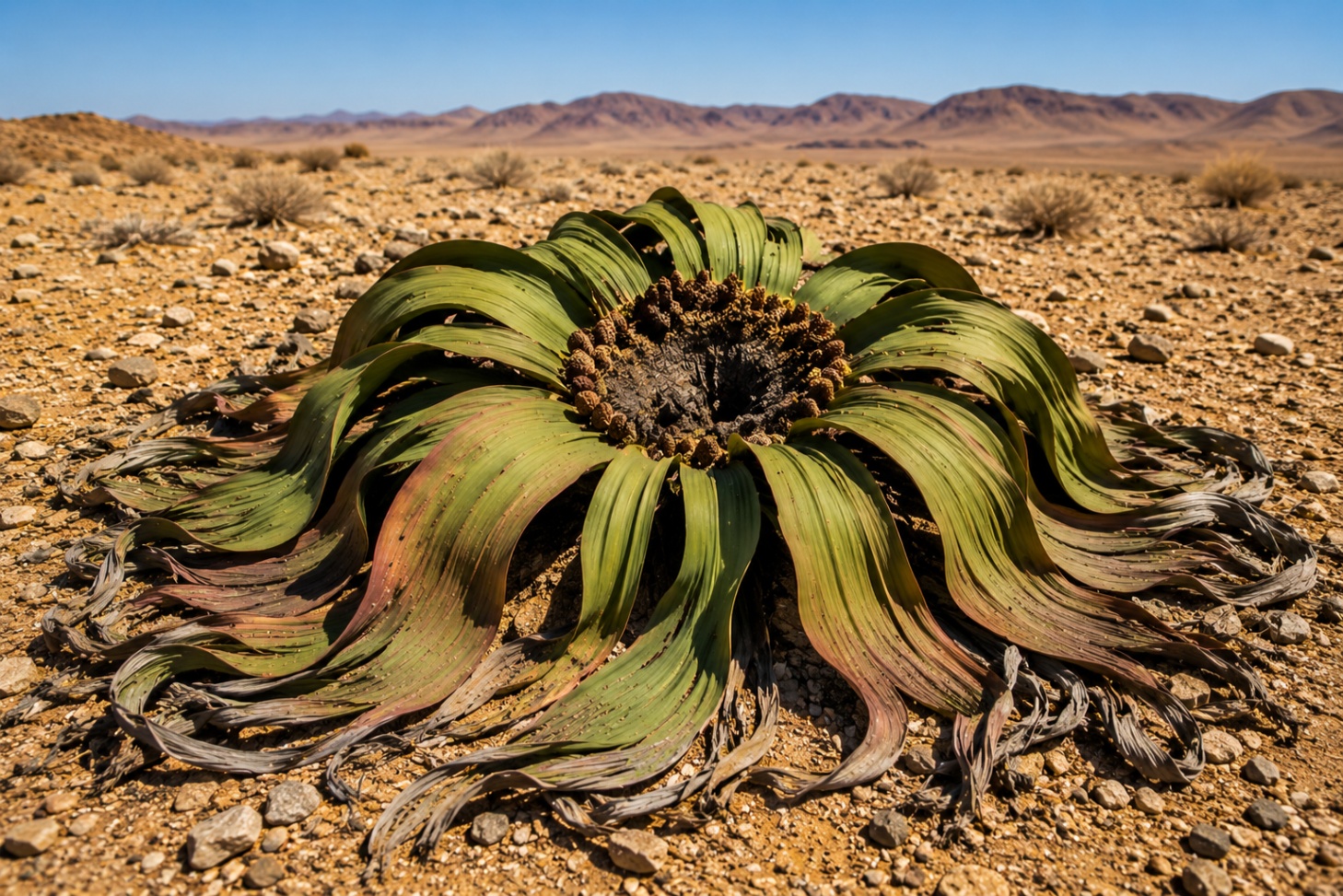
Throughout its entire life, a Welwitschia produces only two leaves. These continue growing from the base year after year and gradually split, twist, and fray in the desert wind.

Some Specimens Are More Than 1,000 Years Old

Many Welwitschias are believed to be several centuries old, while some of the oldest specimens may exceed 1,500 years in age.

Found Nowhere Else

Welwitschia occurs naturally only in the Namib Desert of Namibia and southern Angola.

It Often Appears Dead

Many first-time visitors mistake the plant for a dead or dying shrub. In reality, even the oldest specimens remain alive and continue growing throughout their lifespan.

A Living Fossil

The Welwitschia belongs to an ancient group of seed-producing plants and has survived largely unchanged for millions of years.

It Survives on Fog

In addition to occasional rainfall, Welwitschia relies on moisture from coastal fog and dew, an important adaptation in one of the driest regions on Earth.

Male and Female Plants Are Separate

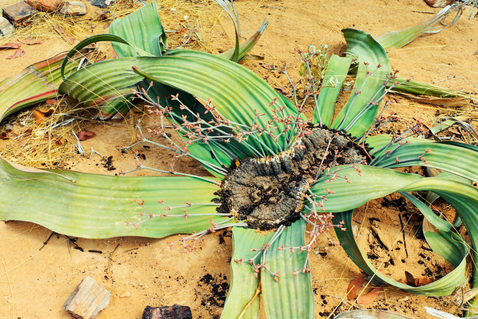
Unlike many flowering plants, individual Welwitschias are either male or female.

A Remarkable Root System

The plant develops a deep taproot and extensive root network that helps it access moisture below the surface.

It Can Grow Wider Than It Is Tall

Although the woody stem remains close to the ground, mature plants can spread several metres across the desert floor.

Namibia's National Plant

Welwitschia is protected by law and is recognised as one of Namibia's most distinctive and important plant species.

The Story of Welwitschia

The Welwitschia was first described by Austrian botanist Friedrich Welwitsch in 1859 after he encountered the plant in present-day Angola. Its unusual appearance fascinated him, and it has continued to intrigue scientists ever since.

The Welwitschia was first described by Austrian botanist Friedrich Welwitsch in 1859 after he encountered the plant in present-day Angola. Its unusual appearance fascinated him, and it has continued to intrigue scientists ever since.

The plant grows from a short woody stem that remains close to the ground. Rather than producing new leaves throughout its life, it relies on just two leaves that continue growing for centuries. Over time, the harsh desert environment tears and twists these leaves into the tangled forms that have become its trademark.

Its survival strategy is equally remarkable. Coastal fog drifting inland from the Atlantic Ocean provides a valuable source of moisture, while an extensive root system allows the plant to make the most of every drop of water available. These adaptations have allowed the Welwitschia to endure in a landscape where many other plants would struggle to survive.

Today, the Welwitschia remains one of Namibia's most remarkable natural treasures and a symbol of resilience in the Namib Desert.

"The plant was the most wonderful thing I had ever seen."

— Friedrich Welwitsch, upon encountering the Welwitschia in 1859

Sossusvlei

Where the Desert Meets the Sky

Few places have become as closely associated with Namibia as Sossusvlei. Situated deep within the Namib-Naukluft National Park, this remarkable landscape of red dunes, white clay pans, and endless horizons has become one of the country’s most recognised natural wonders.
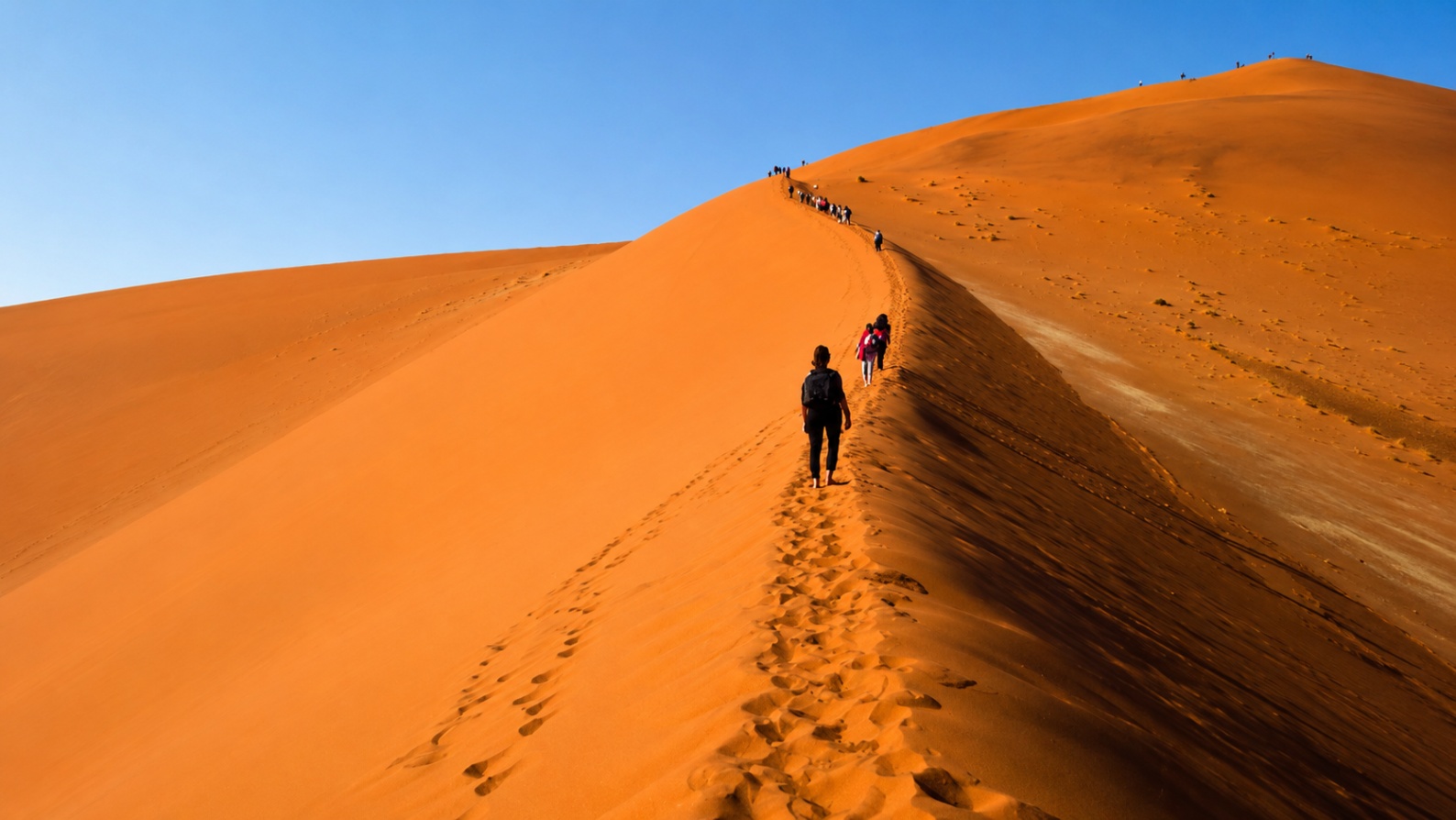
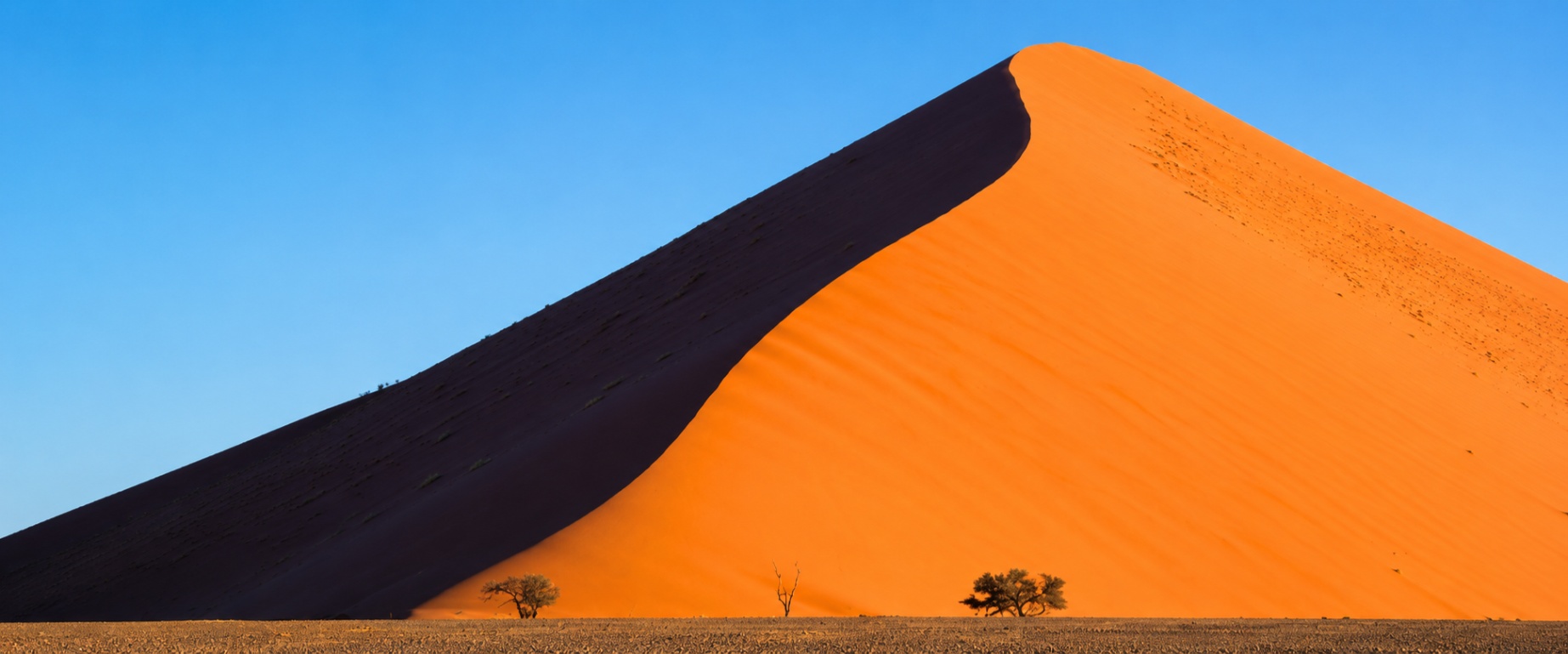
At sunrise, the desert begins to change colour. Long shadows stretch across the sand, the dunes glow in shades of orange and red, and the silence that characterises the Namib becomes impossible to ignore. It is a landscape that appears simple at first glance, yet reveals something new each time it is experienced.
Whether explored on foot, photographed in the early morning light, or viewed from above, Sossusvlei offers a perspective of Namibia that stays with visitors long after they leave.

Why Visit Sossusvlei?

There are deserts all over the world, but few feel quite like the Namib.
What makes Sossusvlei special is not only the dunes themselves, but the sense of space they create. The scale of the landscape is difficult to appreciate until standing amongst it. Distances seem greater, the silence feels deeper, and the colours shift constantly as the light changes throughout the day.
Visitors come to climb dunes that have been shaped by the wind over millions of years, to walk amongst the ancient camelthorn trees of Deadvlei, and to witness a landscape that has remained largely unchanged for centuries.
Yet perhaps the greatest attraction is something far less tangible. Sossusvlei has a way of slowing people down. In a world that rarely stands still, it is a place that encourages visitors to pause, look around, and simply take in their surroundings.

Interesting Facts

One of the World's Oldest Deserts

Sossusvlei lies within the Namib Desert, widely regarded as the oldest desert on Earth and estimated to be at least 55 million years old.

The Meaning of Sossusvlei

The name combines the Nama word "Sossus", meaning "dead end", and the Afrikaans word "vlei", meaning "marsh" or "pan".

A River That Rarely Flows

The Tsauchab River originates in the Naukluft Mountains and only reaches Sossusvlei after periods of significant rainfall. During exceptional rainy seasons, water may collect in the pan, creating a rare and remarkable sight.

Home to Some of the Highest Dunes on Earth

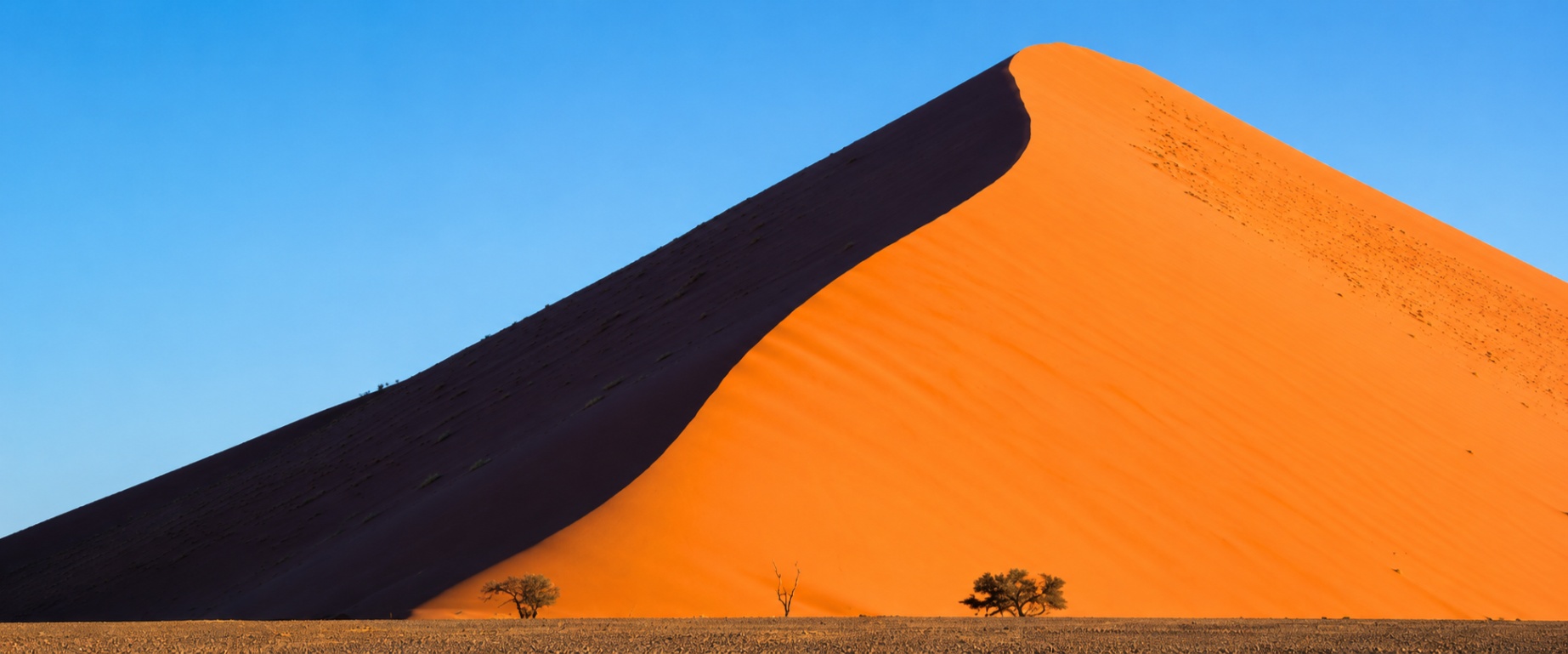
The dunes surrounding Sossusvlei are among the tallest in the world, with some rising more than 300 metres above the desert floor.

Deadvlei's Ancient Trees

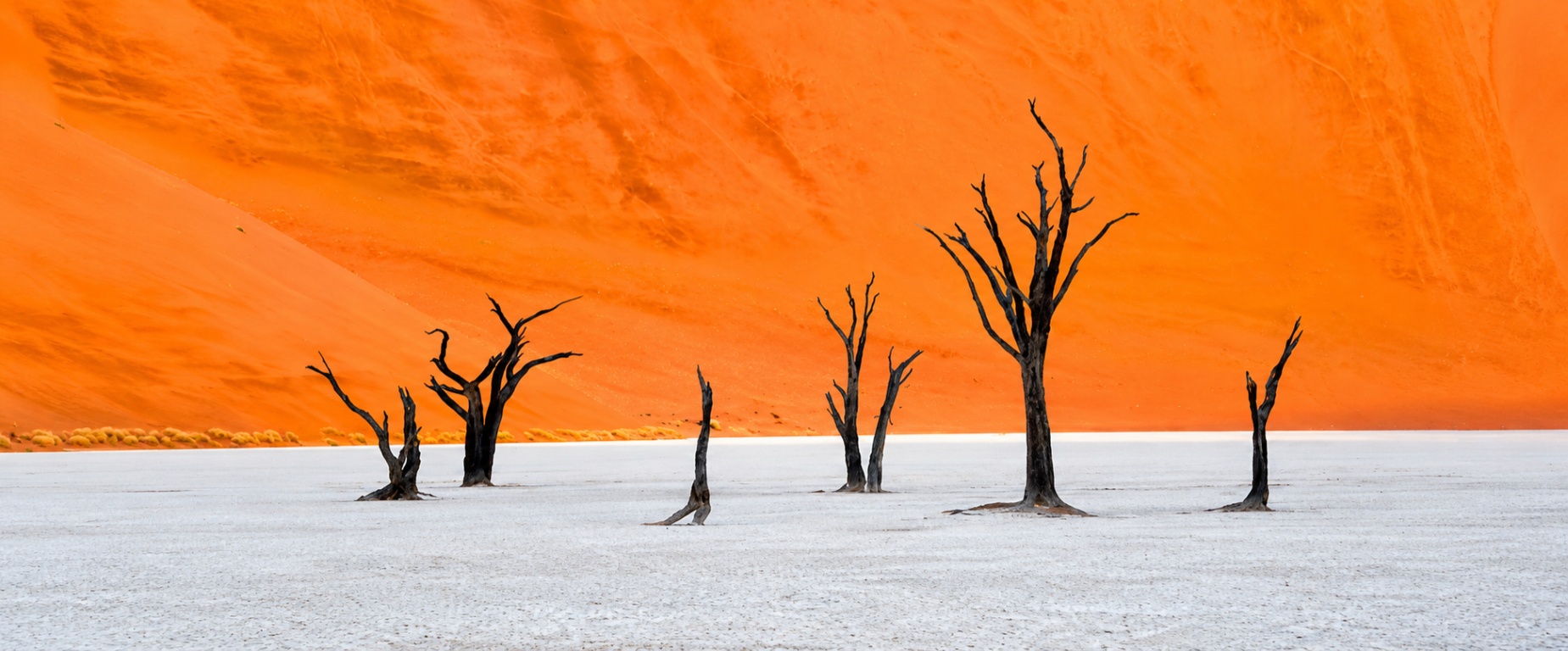
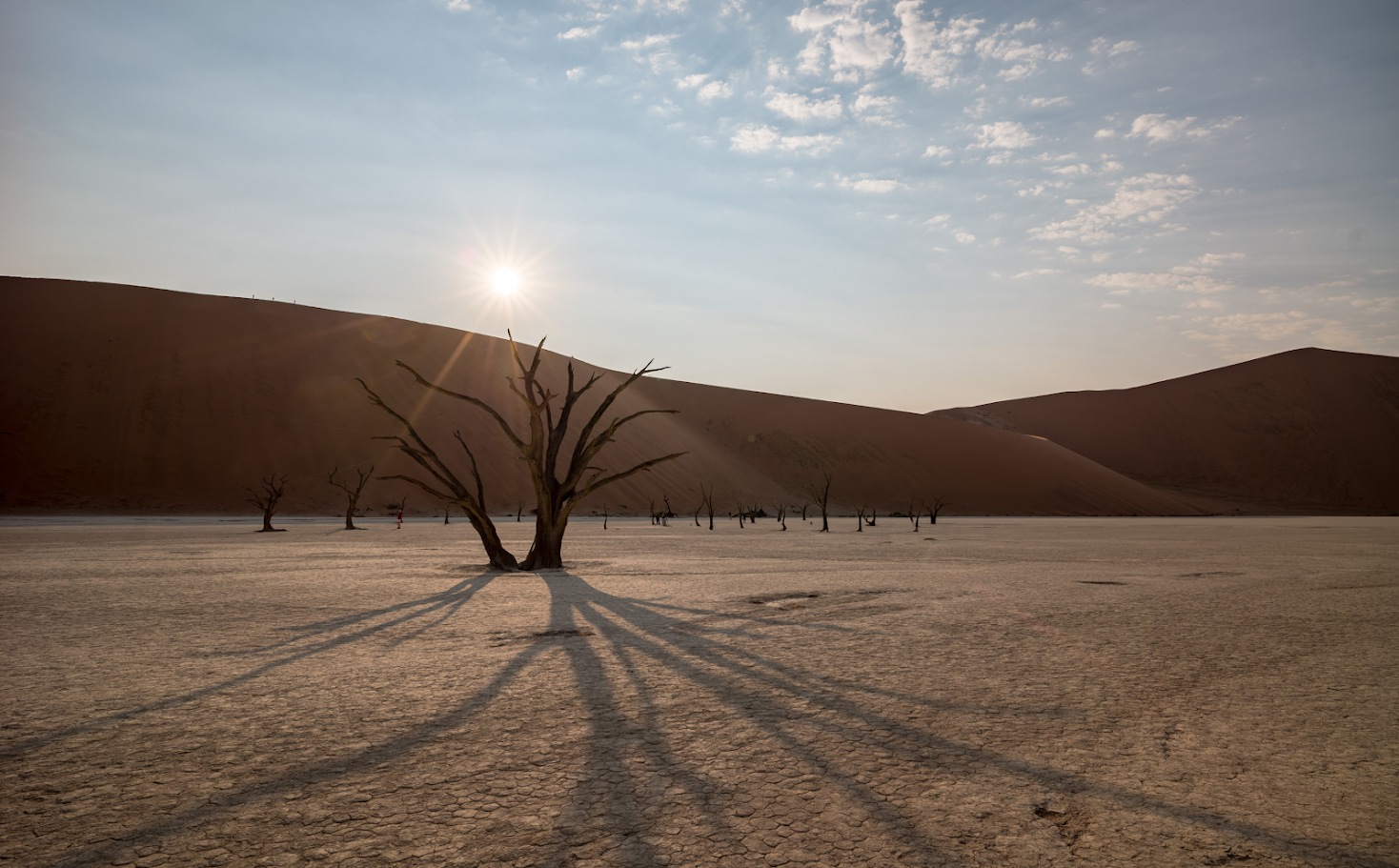
The famous camelthorn trees of Deadvlei are believed to have died hundreds of years ago when shifting dunes prevented floodwaters from reaching their roots. The dry desert climate has preserved them ever since.

A Landscape Shaped by Light

The colours of the dunes change dramatically throughout the day. Depending on the angle of the sun, the sand can appear golden, orange, deep red, or even purple in places.

The Story of Sossusvlei

The story of Sossusvlei is ultimately a story of wind, water, and time.
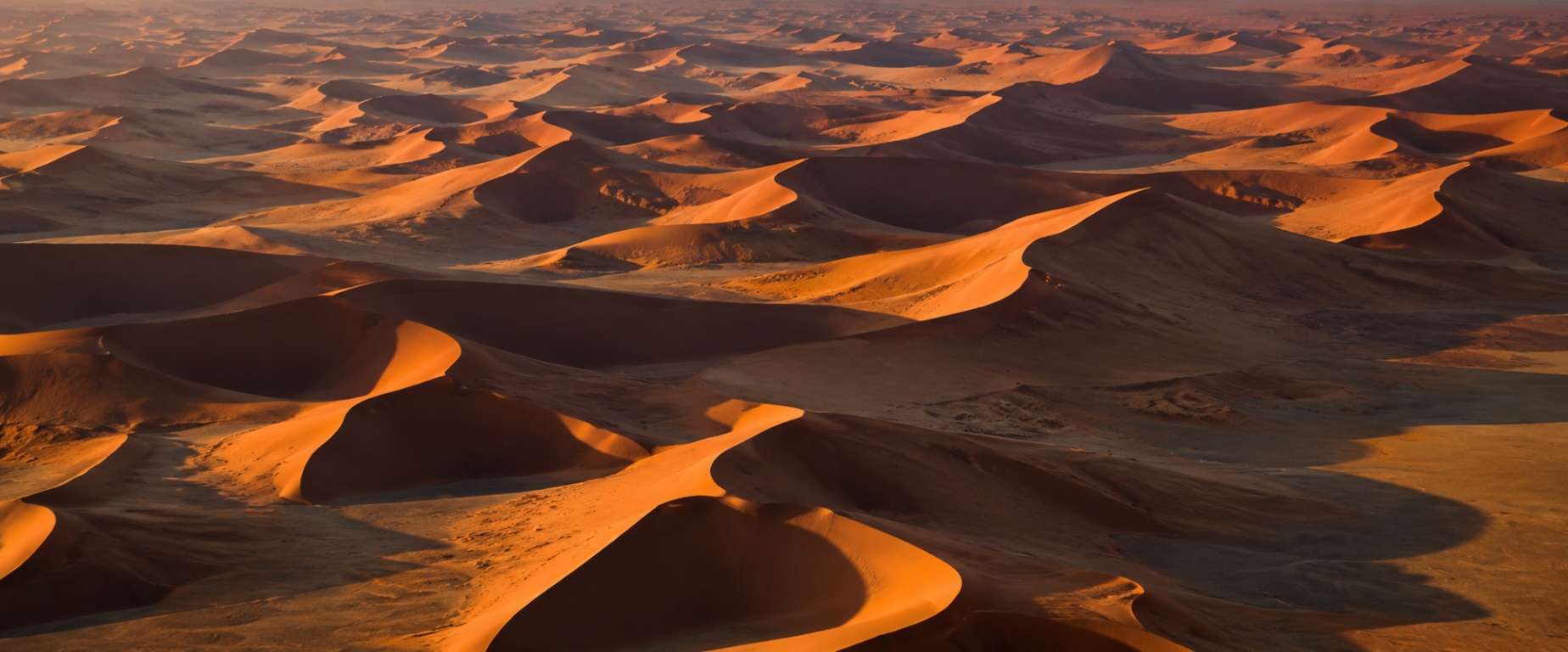
For millions of years, sand carried inland from the Atlantic coast accumulated across the western reaches of Namibia. As the wind continued to shape and move this sand, the dunes of the Namib gradually emerged, creating the vast dune fields seen today.
At the same time, the Tsauchab River carved its way westwards from the Naukluft Mountains. During periods of heavy rainfall, the river flowed into the heart of the desert, depositing water and sediment across the landscape. Over time, advancing dunes blocked its path, preventing the river from continuing further west and creating the basin now known as Sossusvlei.
Nearby Deadvlei tells another chapter of this story. Centuries ago, seasonal floods supported a small grove of camelthorn trees. As the surrounding dunes shifted and water could no longer reach the pan, the trees died. The arid climate prevented them from decomposing, leaving behind the striking silhouettes that have become one of Namibia’s most photographed scenes.
Together, Sossusvlei, Deadvlei, Hiddenvlei, and the Tsauchab Valley reveal a landscape that continues to be shaped by natural forces, reminding visitors that even in a place that appears still, change is constantly taking place.

Best Seen From Above

From above, the dunes stretch across the landscape like waves frozen in time. The path of the Tsauchab River becomes visible, winding through the desert before disappearing amongst the sands. White clay pans stand out against the red dunes, while patterns created by light and shadow reveal details often missed from below.

While Sossusvlei is remarkable from the ground, the air reveals a completely different perspective.

It is from the air that the true scale of Sossusvlei becomes apparent. The relationship between dune, river, and pan is easier to understand, and the vastness of the Namib Desert reveals itself in a way that few other viewpoints can offer.

Places to Explore

The Dry River valleys of Namibia

The Dry River Valleys of Namibia
To many, Namibia is simply a country of deserts. Endless horizons, towering dunes and rugged mountains often dominate the image people have of our country. But look a little closer and you will discover that Namibia is actually framed by water on three sides.

To the south, the Orange River forms the border between Namibia and South Africa. To the west lies the mighty Atlantic Ocean, shaped by the cold Benguela Current, and to the north flows the powerful Kunene River, which also serves as the border between Namibia and Angola.

Yet beyond these permanent water sources lies one of Namibia's most fascinating natural features: its countless dry river valleys.

More then Just Sand

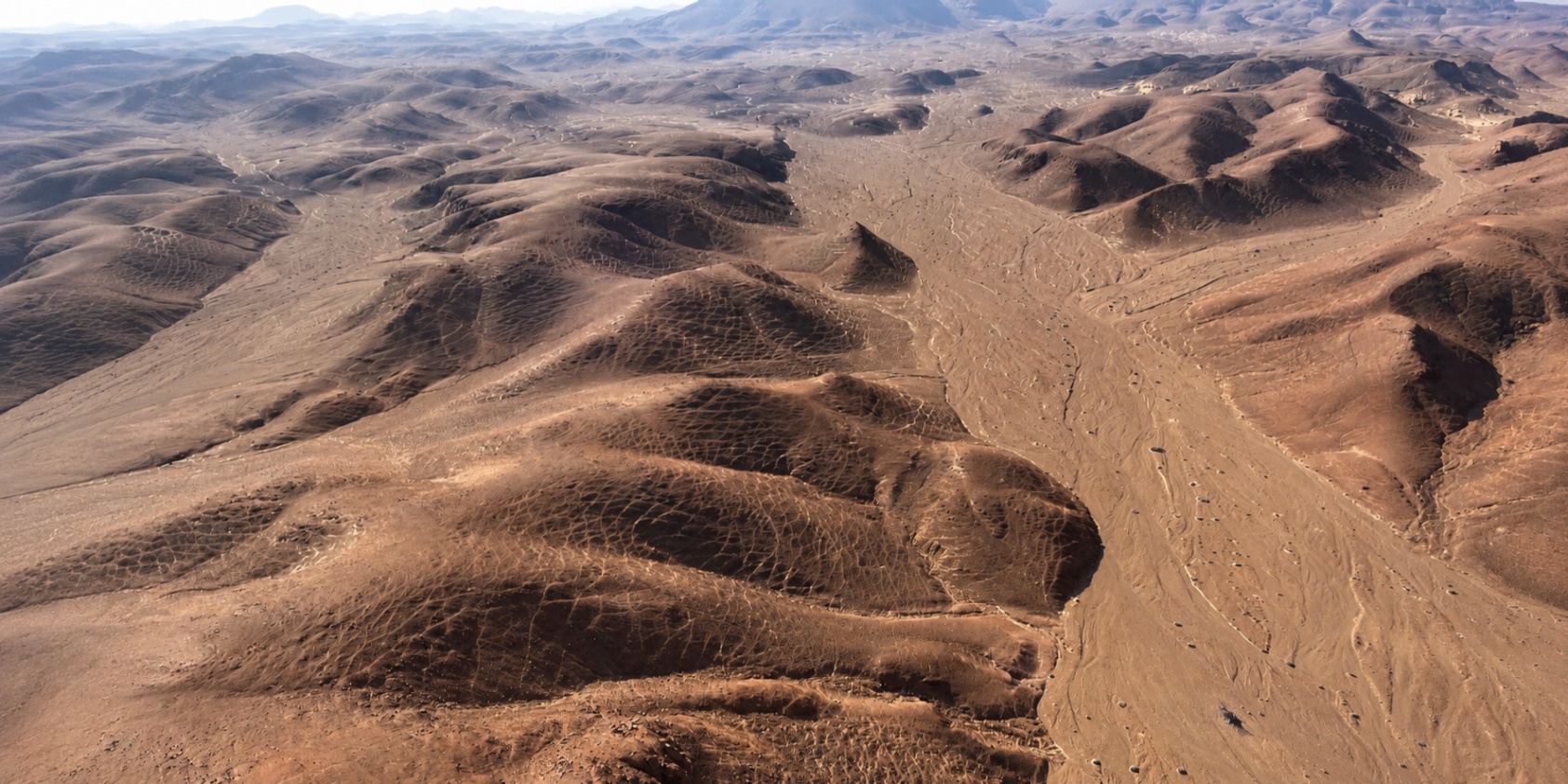
From the air, especially during a fly-in safari, these sandy channels are impossible to miss. They weave their way across the landscape, cutting through mountains, deserts and plains before disappearing into the horizon. To many visitors, they appear to be little more than open spaces where animal tracks can easily be spotted. But to Namibia and Namibians, these river valleys are much more. It is no wonder that Heinz A. Klein-Werner wrote in his proudly Namibian song:

"Hart wie Kameldornholz ist unser Land und trocken sind seine Riviere."
"As hard as camelthorn wood is our land, and dry are its rivers."

He wrote those words in celebration. After all, who writes songs about dry riverbeds? Yet generations of Namibians have proudly sung along because we understand what these rivers represent.

Life Line In The Desert

Although dry river valleys can be found throughout the country, some of the most remarkable are found in north-western Namibia, particularly in Damaraland and Kaokoland. Here, vast ephemeral river systems carve their way through some of the most remote and dramatic landscapes in Southern Africa.

Unlike permanent rivers, ephemeral rivers flow only after seasonal rains. For most of the year they remain dry, appearing as broad sandy valleys winding through rugged mountains and endless gravel plains. Rivers such as the Aba Huab, Huab, Hoanib and Hoarusib are among the most well-known examples and have shaped these landscapes for thousands of years.

At first glance, these riverbeds may seem dry and lifeless. In reality, they are some of the most important lifelines in the region.

At first glance, these riverbeds may seem dry and lifeless. In reality, they are some of the most important lifelines in the region.

Beneath the surface, moisture remains trapped within the sand long after the rains have disappeared. This hidden water source allows trees and vegetation to thrive where they otherwise could not. Towering Ana trees and camelthorn trees line the riverbeds, creating ribbons of green through an otherwise harsh environment.

The tallest trees grow there. The freshest vegetation survives there. Before long, the animals arrive too.

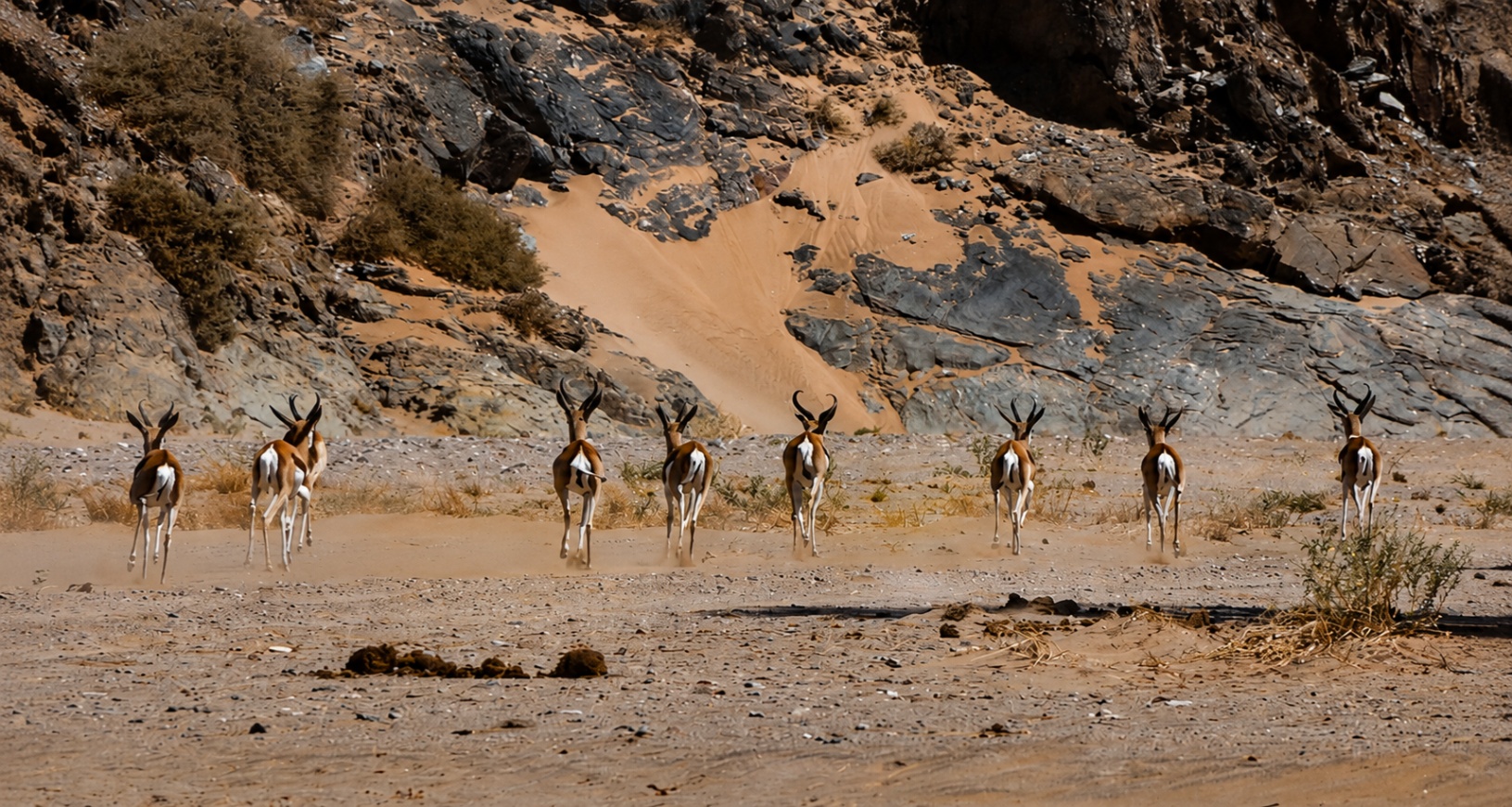
Elephant paths weave through the sand as generations have followed the same routes in search of food and water. Giraffe browse among the trees while springbok and oryx rarely stray far from these green corridors. Predators are never far behind, knowing that where the river goes, life follows.

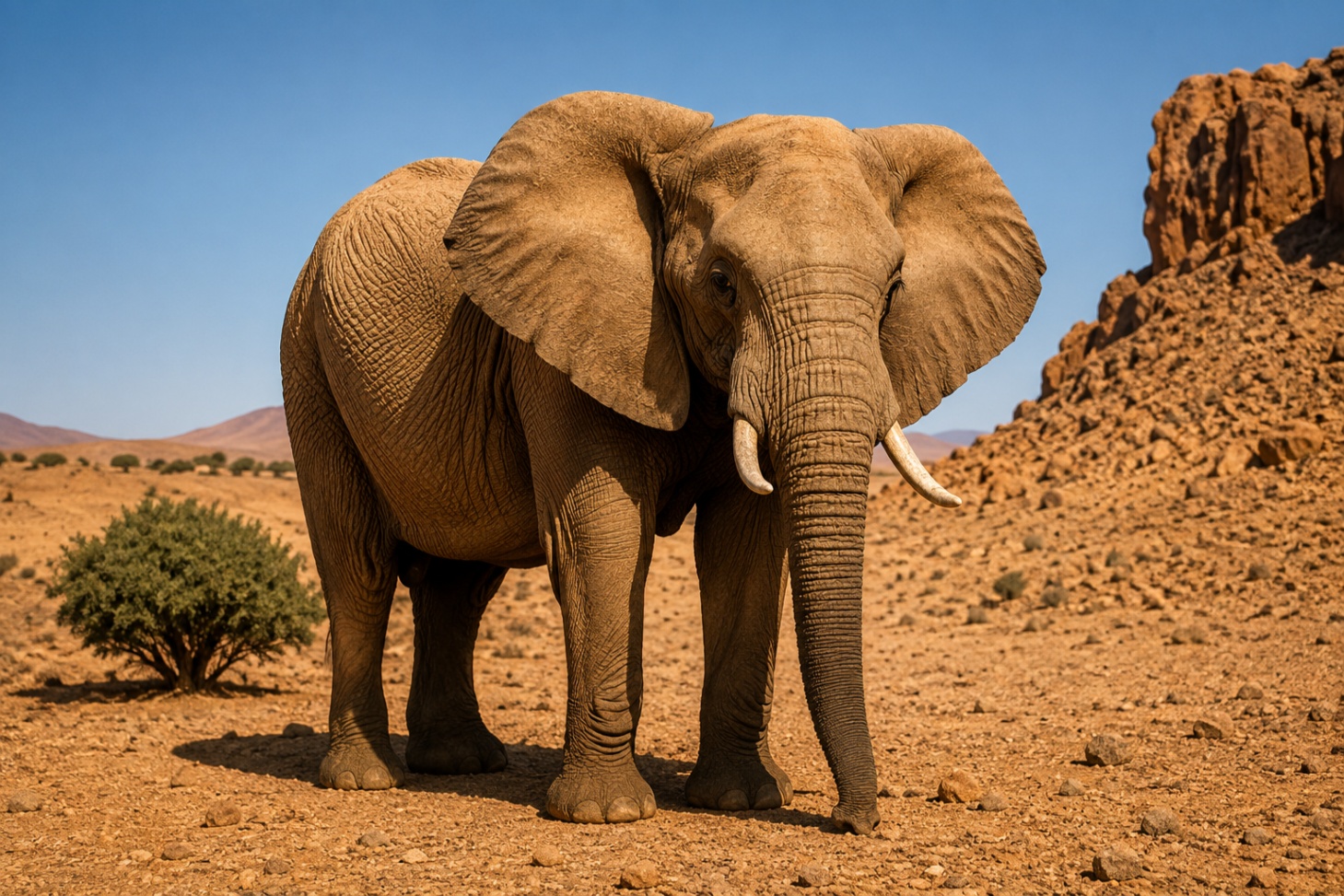
The north-western regions of Namibia are renowned for their desert-adapted wildlife, and nowhere is this adaptation more evident than along the ephemeral rivers. Desert-adapted elephants travel vast distances between food and water sources, often digging into the sand to access hidden groundwater. Living in smaller family groups than their counterparts elsewhere in Africa, they have adapted remarkably to survive in one of the harshest environments on Earth.

Equally remarkable are the desert-adapted lions of the region. Living in landscapes where prey can be scarce and distances immense, they have learned to survive in conditions few would associate with lions.

Yet it is not only wildlife that has adapted to these river valleys.

For travelers and photographers, these dry river valleys offer an experience unlike anywhere else in Namibia. The wildlife does not stand apart from the landscape; it becomes part of it. Animals blend seamlessly into the colors and textures of their surroundings. The vastness of the scenery, the silence of the wilderness and the feeling of remoteness combine to create something truly unforgettable.

For those exploring Damaraland and Kaokoland, the river valleys often become natural guides through the landscape. Follow a river and you will likely find vegetation, wildlife and some of the region's most spectacular scenery. What appears from above to be a simple sandy channel is often the very heart of the landscape below.

Perhaps that is why Namibians hold such affection for their dry rivers. We understand that they are not empty. They are living systems that sustain wildlife, support communities and shape entire ecosystems.

What appears from a distance to be nothing more than a dry stretch of sand is, in reality, one of Namibia's greatest lifelines.

And perhaps that is exactly what Heinz A. Klein-Werner understood when he proudly sang that Namibia's rivers are dry.

Namibia and Its People

Namibia might not be known for the world's greatest customer service. In fact, sometimes it might feel as though customer service is an entirely foreign concept. Yet there is something about the people of this country that makes you miss them almost as soon as you leave.

I am speaking generally, of course. Every country has its impatient drivers, its bad days, and its introverts. But when I think of Namibia, I think of the everyday interactions that many of us hardly notice until we travel elsewhere.

Here, it is perfectly normal to greet a complete stranger while passing on a morning walk. A simple "Good morning" exchanged between people who have never met before. It is common to strike up a conversation with the person standing behind you in a supermarket queue or to offer help when someone looks a little lost.

For the longest time, I assumed this was how the world worked. It was only when travelling abroad that I realised how unusual it actually is.

I quickly discovered that greeting strangers, making casual conversation, or even asking for directions can feel surprisingly foreign in many places. Of course, every country has its own culture and way of doing things, but it made me appreciate something I had always taken for granted: Namibians.

There is a warmth to the people here. An openness. A willingness to help. And a sense of humour that seems to appear when you least expect it.

Personally, I think it might have something to do with the sun.

Namibia is a hot country. The sun shines almost year-round and features proudly on our national flag. We take our sunshine seriously. In fact, when a few cloudy days arrive, we welcome them with excitement. But let that grey weather linger for more than three days and you will quickly hear people asking where the sun has disappeared to.

Perhaps that constant sunshine leaves its mark on us.

Maybe it is the reason strangers greet one another. Maybe it is why people stop to help. Maybe it is why conversations start so easily and laughter comes so naturally.

Whatever the reason, it is one of the things I love most about this country.

And while Namibia's landscapes often steal the spotlight, I hope every visitor leaves with something else as well — a little of the warmth that lives in its people.

I hope you leave with a bit of Namibian sunshine too. Not the kind that tans your skin, but the kind that stays with you long after you've gone home.

The Land of the Brave

The Land of the Brave. Most Namibians know this phrase well. It appears on our coat of arms, in official documents, and is spoken with pride on national occasions.

The origin of these words lies in Namibia's history and the bravery of those who fought for freedom. Yet I have come to believe that this phrase is just as relevant today as it was then. In fact, I think it means far more than many of us realise.

While bravery is often associated with great acts of heroism, I have come to see it revealed in much quieter moments.

I see it in the communities that have learned to thrive in one of the driest and most unforgiving environments in Africa, building lives and livelihoods where many would see only challenges.

I see it in the families who call Namibia's remote places home, where a trip to town can be measured in hours rather than minutes and neighbours may live kilometres apart.

I see it in the families who call Namibia's remote places home, where a trip to town can be measured in hours rather than minutes and neighbours may live kilometres apart.

I see it in the pilot landing on a remote desert airstrip, where the nearest signs of civilisation may be hours away and the horizon stretches endlessly in every direction.

I see it in the conservationist protecting desert-adapted wildlife across vast wilderness areas, safeguarding species in landscapes so large they can seem impossible to manage.

I see it in the entrepreneur building a business in one of the world's smallest markets, relying on determination, creativity, and resilience to succeed.

The more I think about it, the more I realise that bravery is woven into everyday life here.

Perhaps it is because Namibia itself is not an easy place.

We have some of the world's deadliest snakes, free-roaming predators, and it often feels as though every indigenous plant has developed some sort of thorn. Life here has never been about taking the easy route.

This is a country of vast distances, uncertain rainfall, harsh deserts, and landscapes that often seem untouched by time. Easy conditions have never been handed to Namibia. Yet somehow, life flourishes.

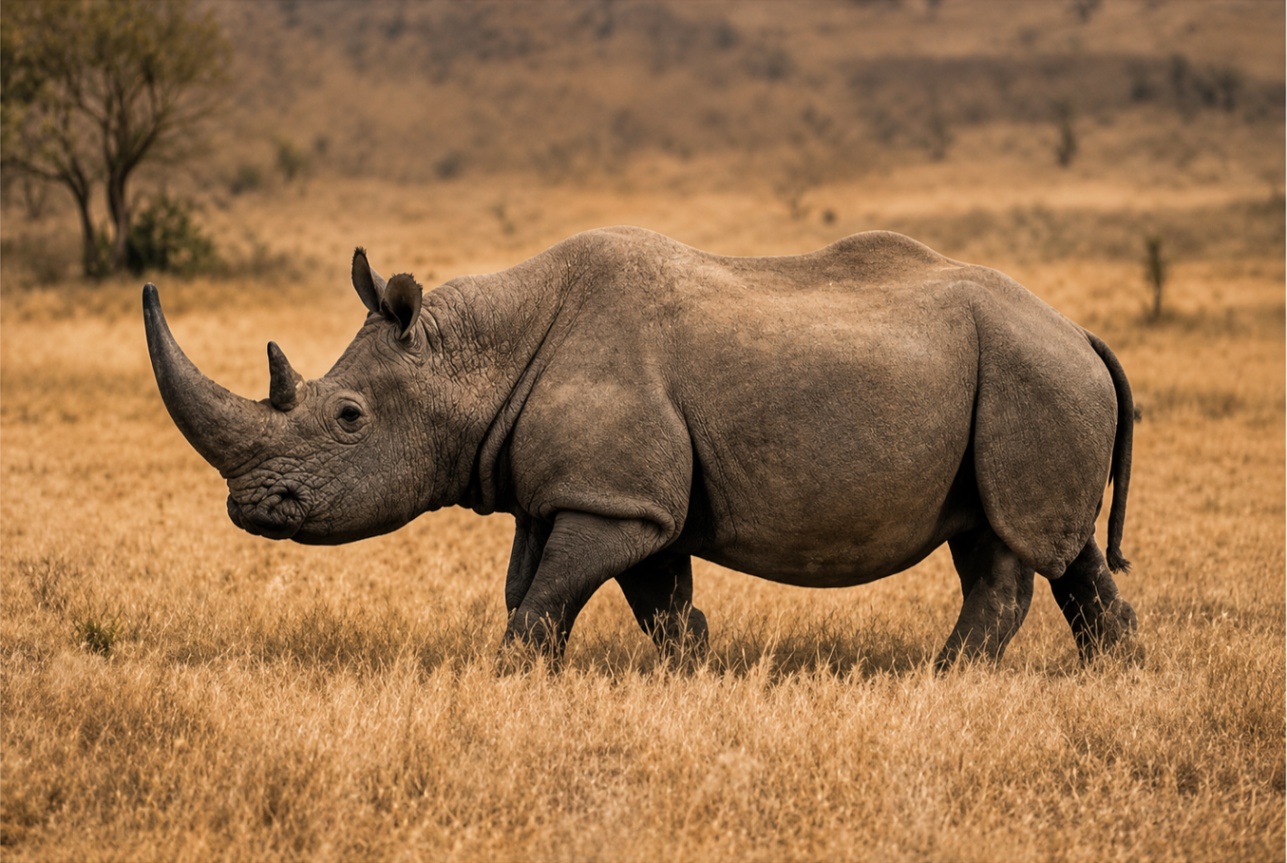
The desert elephant follows ancient river systems through some of the driest landscapes on Earth. The black rhino survives where few would expect it to. And the remarkable Welwitschia mirabilis endures century after century, drawing life from fog and perseverance rather than abundance.

Perhaps bravery is not something unique to the people of Namibia.

Perhaps it is something the country itself teaches.

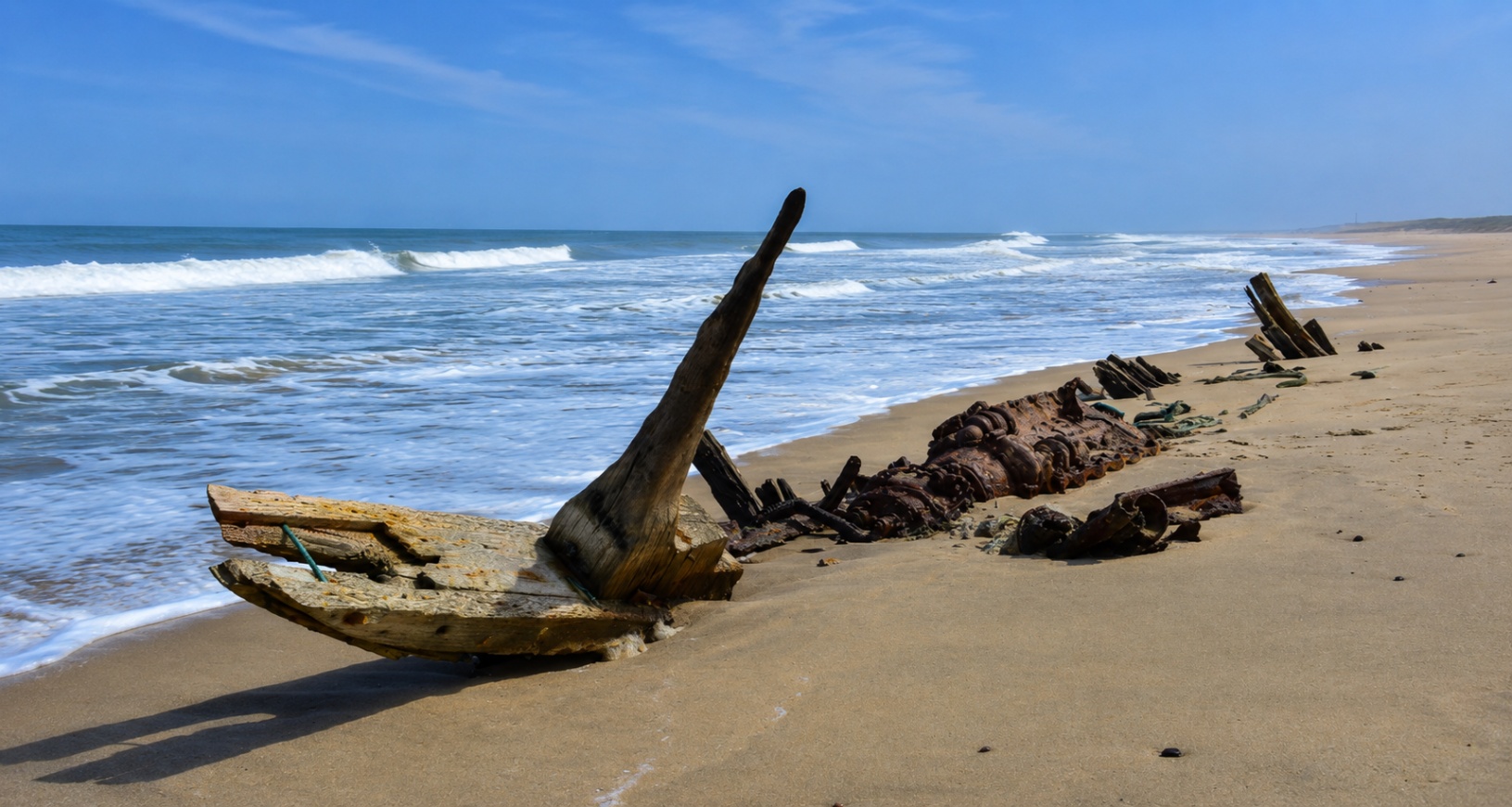
There is a quiet resilience that seems to live in the land. It is present in the red dunes of the Namib, the endless horizons of the Kalahari, the rugged mountains of Damaraland, and the shipwreck-lined shores of the Skeleton Coast.

It is present in the people too.

Not the loud, attention-seeking kind of bravery, but the kind that simply gets on with the job at hand. The kind that adapts, perseveres, and finds a way forward.

The kind that has helped build a nation in one of the world's most remarkable landscapes.

And perhaps that is why the words The Land of the Brave continue to ring true today.

Not because they describe a moment in history.

But because they describe a spirit that can still be found across Namibia — in its landscapes, in its wildlife, and most importantly, in its people.

Whispers of the Dunes

Whispers of the Dunes